By Daniel Rowles, lead trainer at Target Internet and author of Digital Branding (Kogan Page). Last updated: November 2026.
The best marketing campaigns of 2026 had one thing in common: they gave people something to do, not just something to watch. Our six picks are all Grand Prix winners at Cannes Lions 2026. Below we explain what each one did, why it worked and what you can take from it.
How did we choose the best campaigns of 2026?
There are many ways to judge a campaign, from awards to sales to how much people talked about it. For this round-up we started with the Grand Prix winners at the 2026 Cannes Lions festival, the advertising industry's biggest awards, and picked six that offer practical lessons for marketers working with ordinary budgets. Each one is built on an idea simple enough to explain in a sentence.
This is our annual round-up, so we will update it each year with new campaigns. For more ideas, see our guides to experiential marketing and transmedia storytelling.
What were the best marketing campaigns of 2026?
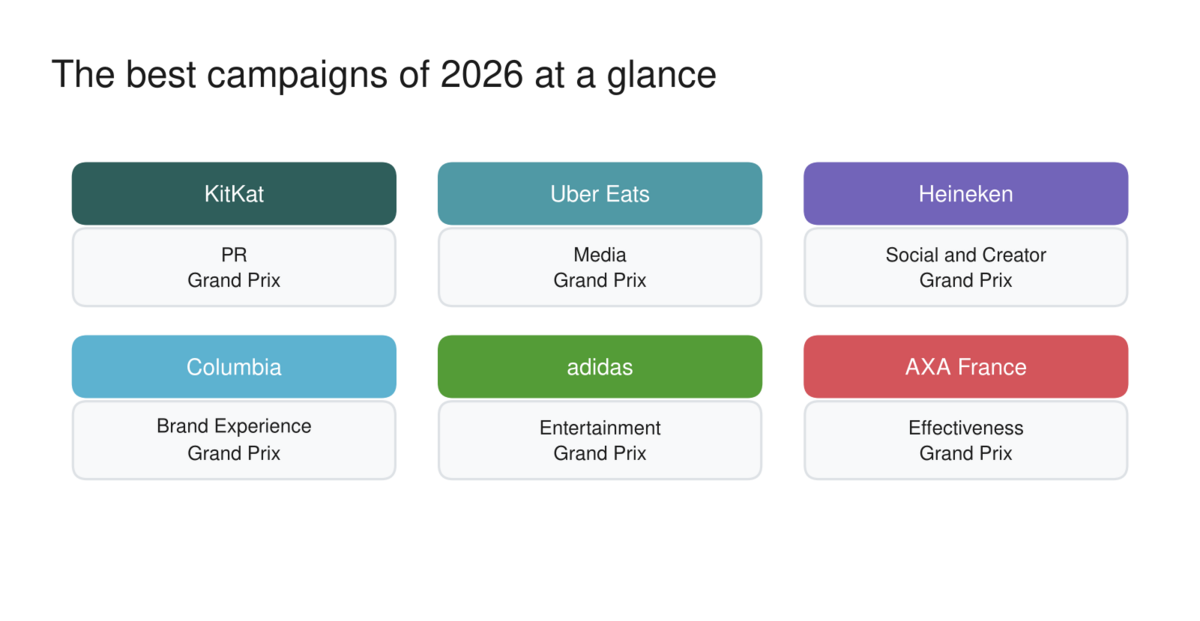
Here are our six picks, with the Cannes Lions Grand Prix each one won.
1. KitKat: the Stolen KitKat Tracker
A week before Easter, the most important weekend of the year for chocolate, a lorry carrying 12 tonnes of KitKat bars, 413,793 of them, was stolen in transit between Italy and Poland. Most brands would have tried to keep a crisis like that quiet. KitKat did the opposite.
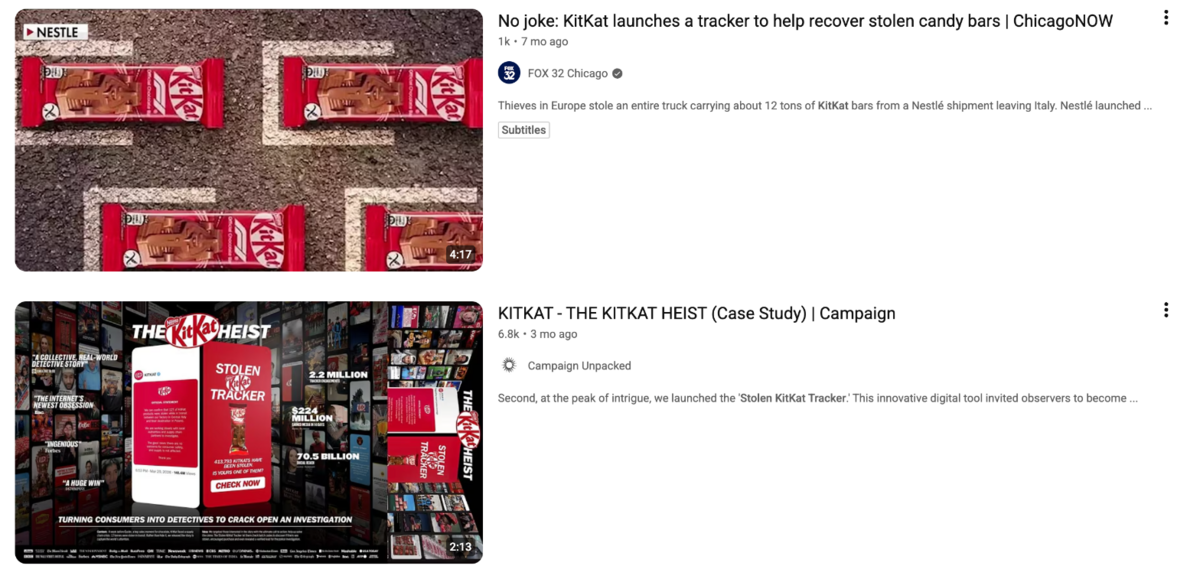
Working with VML and Burson, the brand first released playful, factual statements that gave the media permission to have fun with the story. Then, at the peak of attention, it launched the Stolen KitKat Tracker, a web tool that let anyone enter the eight-digit batch code from their bar to check whether it came from the stolen shipment. According to WPP's case study, the tracker generated more than 2.2 million engagements and genuine leads for the police, and KitKat took 44% of Meta view share during Easter, nearly three times its closest competitor.
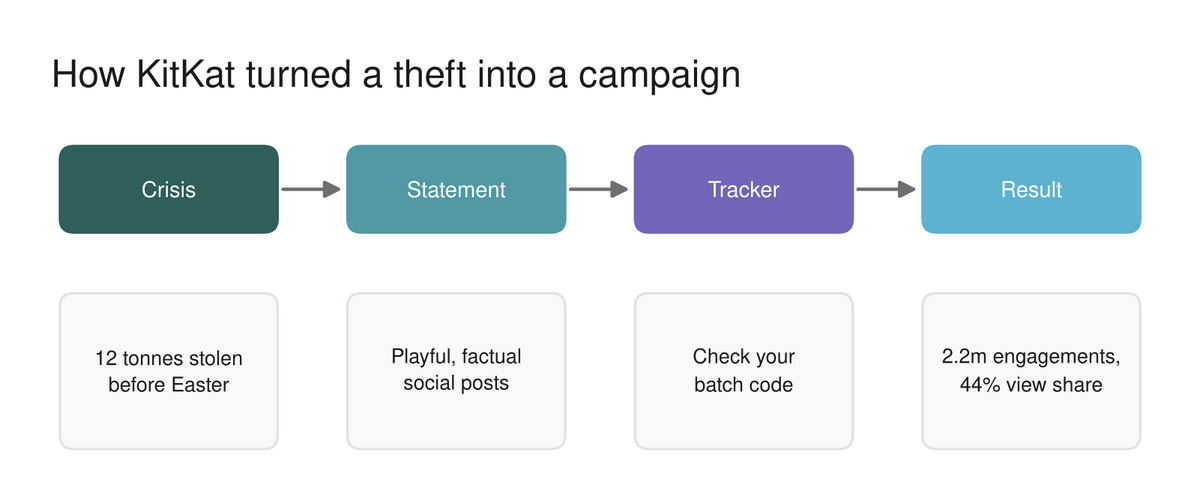
The lesson: a crisis handled with honesty and the brand's own personality can become an opportunity. KitKat turned passive scrollers into amateur detectives and won the PR Grand Prix.
2. Uber Eats: Build Your Own Super Bowl Commercial
Super Bowl ads are the most expensive, most scrutinised spots in advertising. Uber Eats handed its ad over to fans, letting them build their own version of its Super Bowl commercial inside the app, with more than 1,000 possible edits. Crucially, the participation happened where people order food, so engagement was tied directly to purchase. The campaign won the Media Grand Prix and, according to the jury coverage, delivered the platform's best-ever Super Bowl sales.
The lesson: participation is most valuable when it happens in the same place people buy. Ask where your audience could join in, and make that the place they can also act.
3. Heineken: Could Have Been a Heineken
Everyone has received a voice note that turns into a miniature podcast. Heineken, working with LePub, launched a WhatsApp bot in Brazil that turned this everyday frustration into an invitation. People who received a voice note of three minutes or more could forward it to the bot and get back the message "Could have been a Heineken", along with a voucher for a free beer and recommendations for nearby bars to meet the sender in person, as Marketing Dive reported.
It fits Heineken's long-running brand idea about real-life social connection, and it won the Social and Creator Grand Prix, helping Heineken become Cannes Lions Creative Brand of the Year.
The lesson: build on a habit people already have. The best social ideas plug into existing behaviour rather than asking people to learn something new.
4. Columbia Sportswear: Expedition Impossible
To prove how tough its outdoor gear is, Columbia Sportswear, with Adam&Eve\TBWA, made an outrageous offer: it would hand over the company to anyone who could prove the Earth is flat. The stunt put product durability at the centre of the story, because proving it would mean travelling to the "edge" of the world in Columbia kit. It generated earned media across science, outdoor and mainstream press, and won the Brand Experience and Activation Grand Prix.
The lesson: a bold, slightly absurd promise can prove a product benefit more memorably than a list of features, as long as the benefit stays at the heart of the idea.
5. adidas: Original Forever
When Oasis reunited for their 2025 tour, adidas Originals and Johannes Leonardo created "Original Forever", a celebration of Oasis and Britpop-era Britain set to "Live Forever". Because the brand and band already shared a genuine cultural history, the campaign felt authentic rather than opportunistic, and the reunion hype widened its reach. It won two Grand Prix at Cannes, including the Entertainment Grand Prix.
The lesson: ride cultural moments only when you have a real connection to them. Shared history is what separates a genuine partnership from a borrowed one.
6. AXA France: Three Words
AXA France, with Publicis Conseil, added three words, "and domestic violence", to the list of events covered by its home insurance contracts, making emergency relocation accessible to survivors of abuse. It was a change to the product itself, not just a message about it, and it won the Creative Effectiveness Grand Prix.
The lesson: the most powerful marketing sometimes starts with changing what the product does. Purpose is most credible when it is built into the offer.
The Target Internet platform can help you build these skills, with interactive courses across digital marketing and AI, skills benchmarking to show where your gaps are, accredited certification, over 400 episodes of the Digital Marketing Podcast, and monthly live masterclasses.
What do the best campaigns have in common?
Looking across all six, a few patterns stand out.
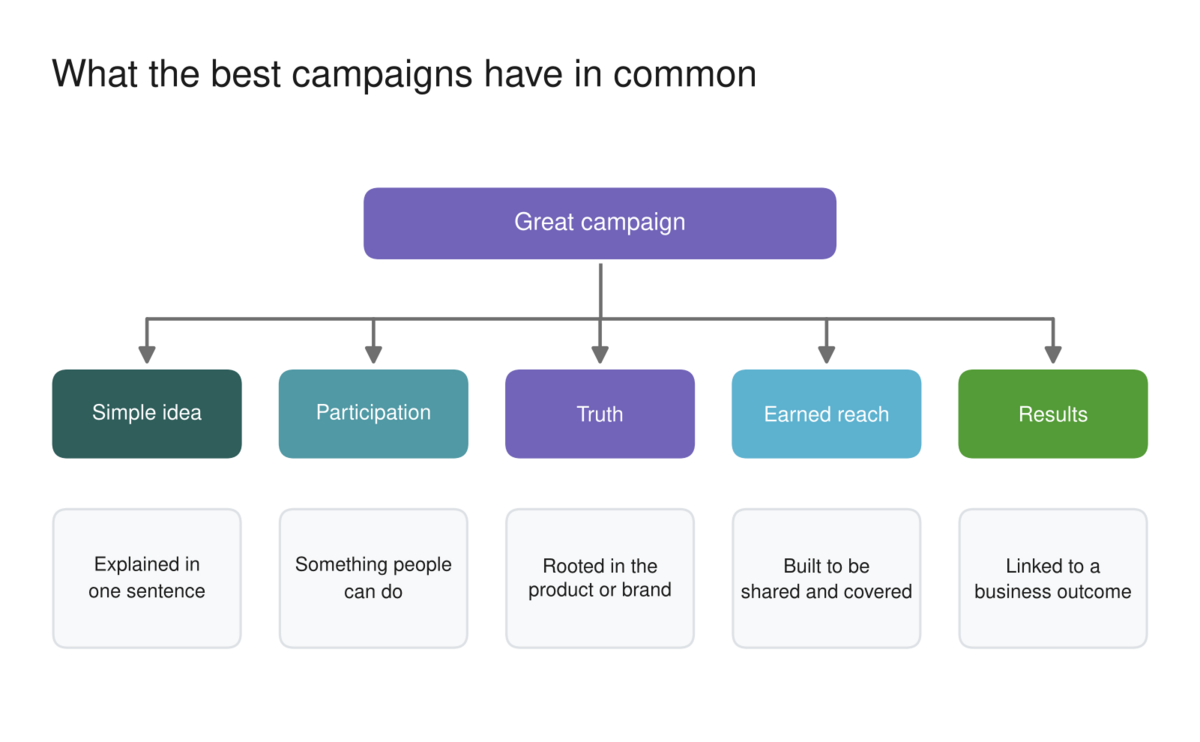
Every idea can be explained in a sentence.
Most invited participation, whether scanning a barcode, editing an ad or forwarding a voice note. Each was rooted in a truth about the product or brand, which made it credible. They were designed to earn coverage and sharing rather than relying only on paid media. And the strongest were linked to a clear business result, from sales to share of voice.
It is also worth noticing what is missing. None of these campaigns depends on a huge production budget for its core idea. KitKat's response was turned around quickly in response to a real event, and Heineken's bot is a simple piece of technology. That makes their lessons usable by brands of any size. Our article on great B2B social media campaigns shows the same principles at work in business-to-business marketing.
How can you apply these lessons to your own marketing?
Award-winning campaigns are useful only if you can learn from them. The trick is to look past the execution to the idea underneath.
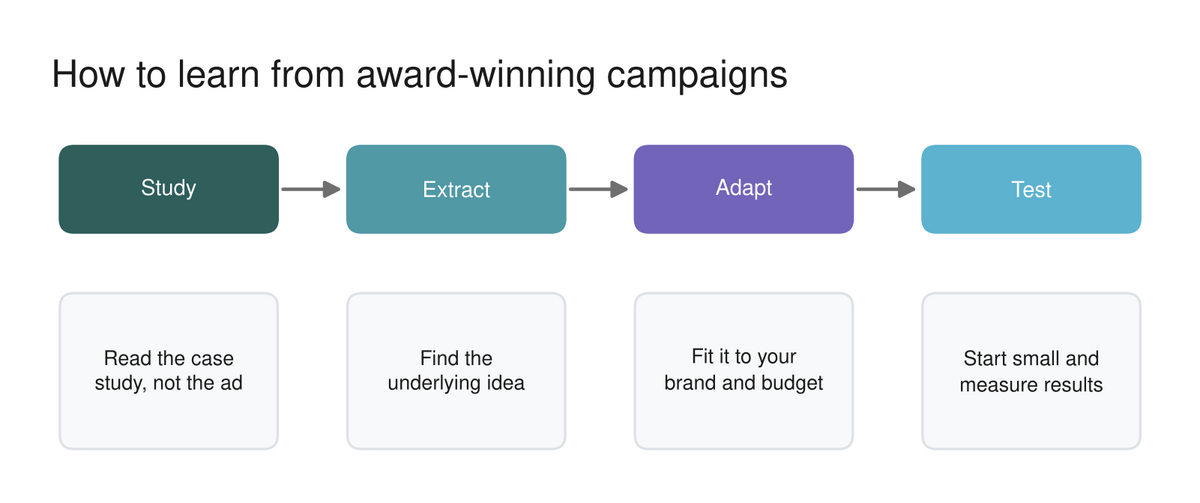
Read the full case study, which explains the problem, insight and results, rather than just watching the ad. Extract the underlying idea, such as "turn a frustration into a reward". Then adapt that idea to your own brand, audience and budget, start small and measure the result. It also helps to learn from what goes wrong; our guide to digital marketing strategy failures covers the common traps.
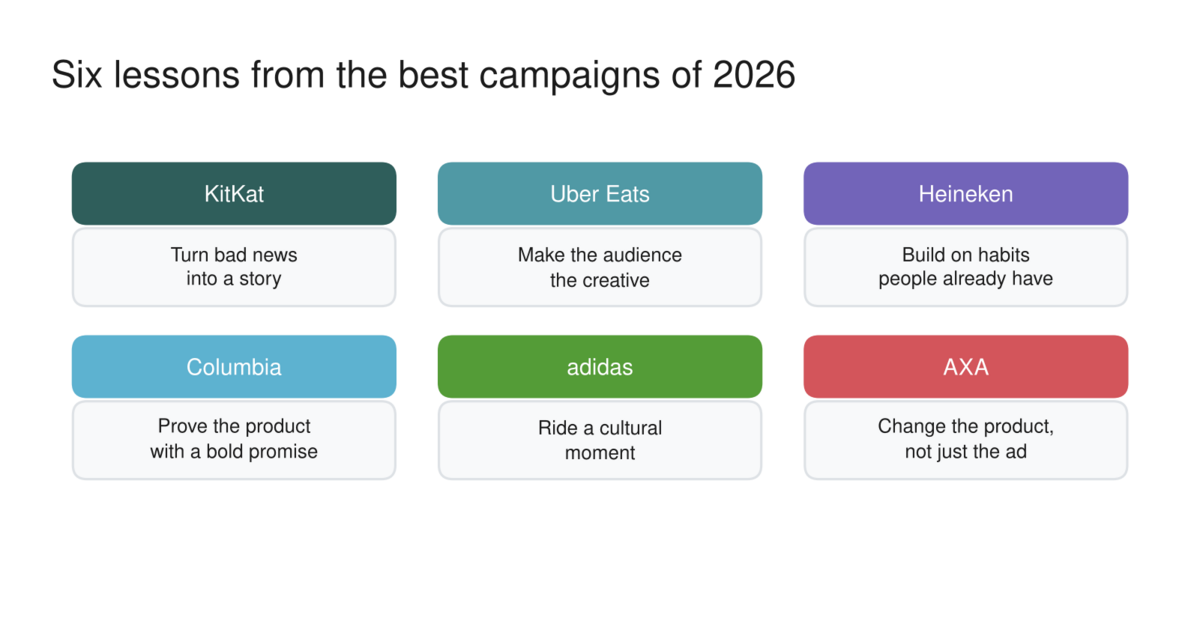
Copy and paste prompt: "Here are six lessons from award-winning campaigns: turn bad news into a story, make the audience the creative, build on habits people already have, prove the product with a bold promise, ride a cultural moment you genuinely own, and change the product rather than just the ad. Our brand is [brand], we sell [product] to [audience] and our budget is [budget]. For each lesson, suggest one campaign idea we could realistically run, the insight behind it and how we would measure success."
Frequently asked questions
What were the best marketing campaigns of 2026?
Our picks are KitKat's Stolen KitKat Tracker, Uber Eats' Build Your Own Super Bowl Commercial, Heineken's Could Have Been a Heineken, Columbia Sportswear's flat Earth challenge, adidas' Original Forever with Oasis, and AXA France's Three Words, all Grand Prix winners at Cannes Lions 2026.
What makes a marketing campaign successful?
Successful campaigns usually combine a simple, memorable idea with a genuine truth about the brand or product, give people a reason to take part or share, and are linked to a clear business result such as sales, share of voice or brand awareness.
What is Cannes Lions?
Cannes Lions is the International Festival of Creativity, held each June in Cannes, France. It is the advertising industry's largest awards, and the Grand Prix is the top prize in each of its categories.
Can small businesses learn from big brand campaigns?
Yes. Focus on the underlying idea rather than the production budget. Ideas such as turning a customer frustration into a reward or responding quickly and honestly to a problem can work at any scale.
If you are ready to take a structured approach to building your digital marketing skills, explore Target Internet membership options and discover how interactive courses, benchmarking tools, the podcast, accredited certification and live masterclasses can support you and your team.
About the author
Daniel Rowles is lead trainer at Target Internet, a Senior Lecturer at Imperial College and the author of several books on digital marketing published by Kogan Page, including Digital Branding. He co-hosts The Digital Marketing Podcast and delivers digital marketing and AI training for organisations around the world. You can find out more on his Target Internet profile.
Bibliography
1. Cannes Lions (2026). Final winners announced for 2026. https://www.canneslions.com/news/final-winners-announced-for-2026
2. WPP. How KitKat turned a 12-tonne disaster into a global brand triumph. https://www.wpp.com/en/case-studies/how-kitkat-turned-a-12-tonne-disaster-into-a-global-brand-triumph
3. Marketing Dive. Heineken swaps voice notes for beer in latest bid for IRL connections. https://www.marketingdive.com/news/heineken-swaps-voice-notes-for-beer-in-latest-bid-for-irl-connections/808131/
4. DesignRush (2026). Cannes Lions 2026 winners: Anthropic, KitKat, Apple and more. https://news.designrush.com/cannes-lions-2026-grand-prix-winners