By Daniel Rowles, lead trainer at Target Internet and author of Digital Branding (Kogan Page). Last updated: November 2026.
SMART marketing objectives are goals that are Specific, Measurable, Achievable, Relevant and Time-bound. Instead of "grow our social media", a SMART objective says "increase LinkedIn followers from 5,000 to 7,500 by the end of June to support our B2B lead generation goal". SMART objectives turn broad ambitions into targets a team can plan around, measure and be held accountable for, and they are the bridge between business goals and the KPIs you track day to day.
What does SMART stand for?
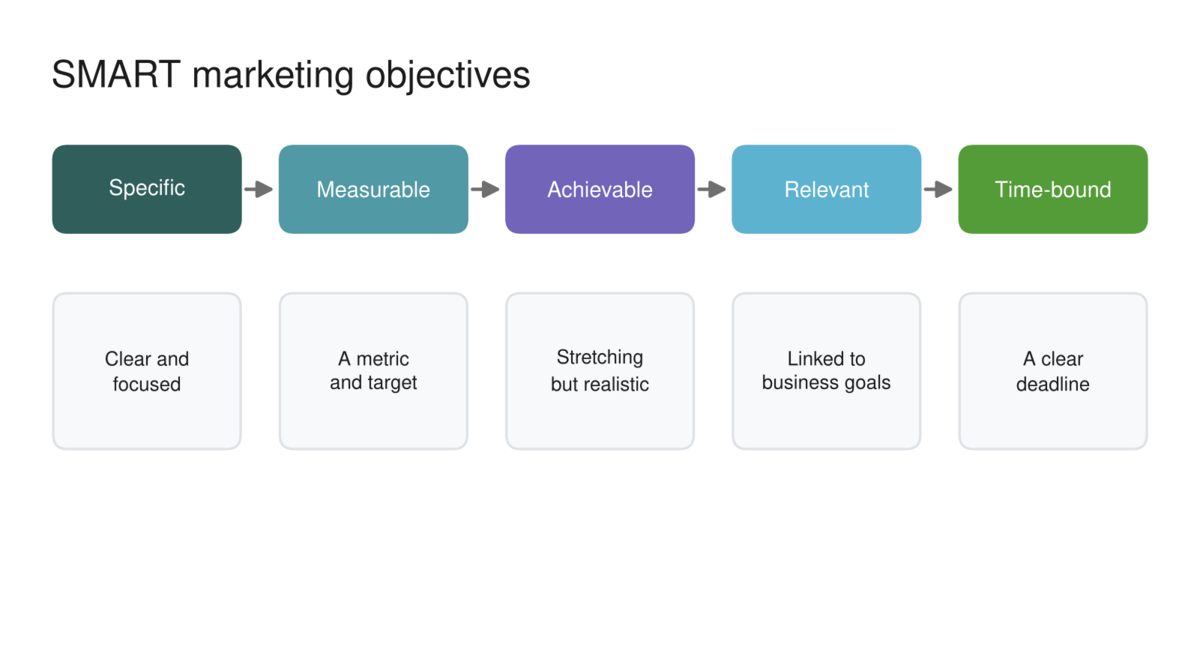
- Specific: what exactly will be achieved, for which product, audience or market? Vague goals such as "sell more" cannot guide decisions.
- Measurable: which metric will show success, from what starting point, to what target?
- Achievable: is the target stretching but realistic, given your budget, skills and past performance?
- Relevant: does it support a wider business goal? An objective that does not matter to the business will not get support.
- Time-bound: by when? A deadline creates focus and lets you review progress.
You will see small variations, such as "attainable" or "realistic" for A, and "time-limited" for T. The meaning is the same.
What are examples of SMART marketing objectives?
| Area | Vague goal | SMART objective |
|---|---|---|
| SEO | Get more search traffic | Increase organic visits to our product pages by 25 percent, from 8,000 to 10,000 a month, by 31 December |
| Improve our newsletter | Raise the newsletter click-through rate from 2.1 percent to 3 percent over the next two quarters | |
| Lead generation | Get more leads | Generate 300 qualified B2B leads from LinkedIn and webinars in Q3, at a cost per lead below 60 pounds |
| Social media | Grow our social presence | Increase LinkedIn followers from 5,000 to 7,500 by the end of June, with engagement above 3 percent |
| Ecommerce | Sell more online | Increase online conversion rate from 1.8 percent to 2.3 percent by the end of the financial year |
| Brand | Be better known | Increase prompted brand awareness among our target audience from 18 percent to 25 percent within 12 months, measured by survey |
How do you set SMART marketing objectives?
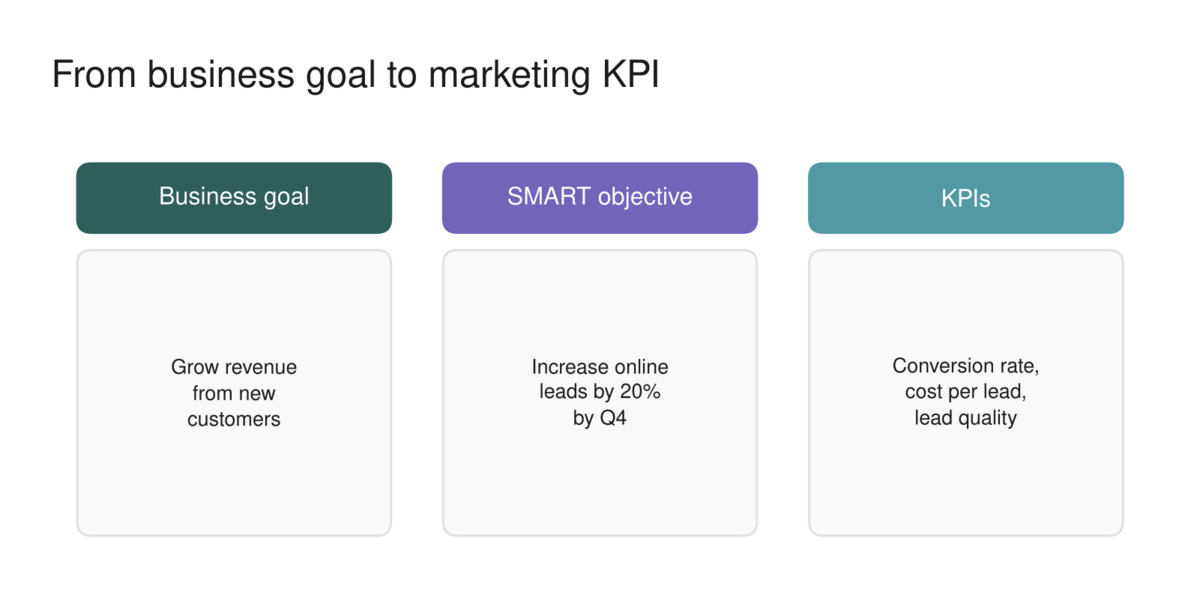
- Start with the business goal, such as revenue growth, entering a new market or retaining customers.
- Understand your current position. A SWOT and TOWS analysis and your analytics data show your baseline and options.
- Write the objective, checking it against each of the five criteria.
- Choose KPIs that show progress towards it, and make sure you can actually measure them.
- Review regularly and adjust if circumstances change significantly.
Keep the number of objectives small: three to five per team or campaign is usually enough. More than that dilutes focus. Many organisations also use OKRs (objectives and key results), where an inspiring objective is paired with measurable key results; SMART thinking still applies to the key results.
SMART objectives feed directly into your plan. Our guides to strategic positioning and the 7 Ps help shape what comes next.
Copy and paste prompt: "Act as a marketing planner. Our business goal for the next year is [goal]. Here is our current performance: [key figures, such as traffic, leads, conversion rate, followers]. Our budget and team are [describe]. Suggest four SMART marketing objectives that support the goal, each with a baseline, target, deadline and the KPIs we should track. Flag any objective that looks unrealistic based on our current performance."
The Target Internet platform can help you build these skills, with interactive courses across digital marketing and AI, skills benchmarking to show where your gaps are, accredited certification, over 400 episodes of the Digital Marketing Podcast, and monthly live masterclasses.
Frequently asked questions
What is a SMART objective in marketing?
A marketing goal that is specific, measurable, achievable, relevant and time-bound, so it can guide planning and be tracked.
What is the difference between an objective and a KPI?
An objective is what you want to achieve; a KPI is a measure that shows whether you are on track.
How many marketing objectives should you have?
Usually three to five per team or campaign, so the team stays focused.
Are SMART objectives still useful?
Yes. Frameworks such as OKRs build on the same principles, and clear, measurable goals matter even more as marketing becomes more data-driven.
If you are ready to take a structured approach to building your digital marketing skills, explore Target Internet membership options and discover how interactive courses, benchmarking tools, the podcast, accredited certification and live masterclasses can support you and your team.
About the author
Daniel Rowles is lead trainer at Target Internet, a Senior Lecturer at Imperial College and the author of several books on digital marketing published by Kogan Page, including Digital Branding. He co-hosts The Digital Marketing Podcast and delivers digital marketing and AI training for organisations around the world. You can find out more on his Target Internet profile.