By Daniel Rowles, lead trainer at Target Internet and author of Digital Branding (Kogan Page). Last updated: November 2026.
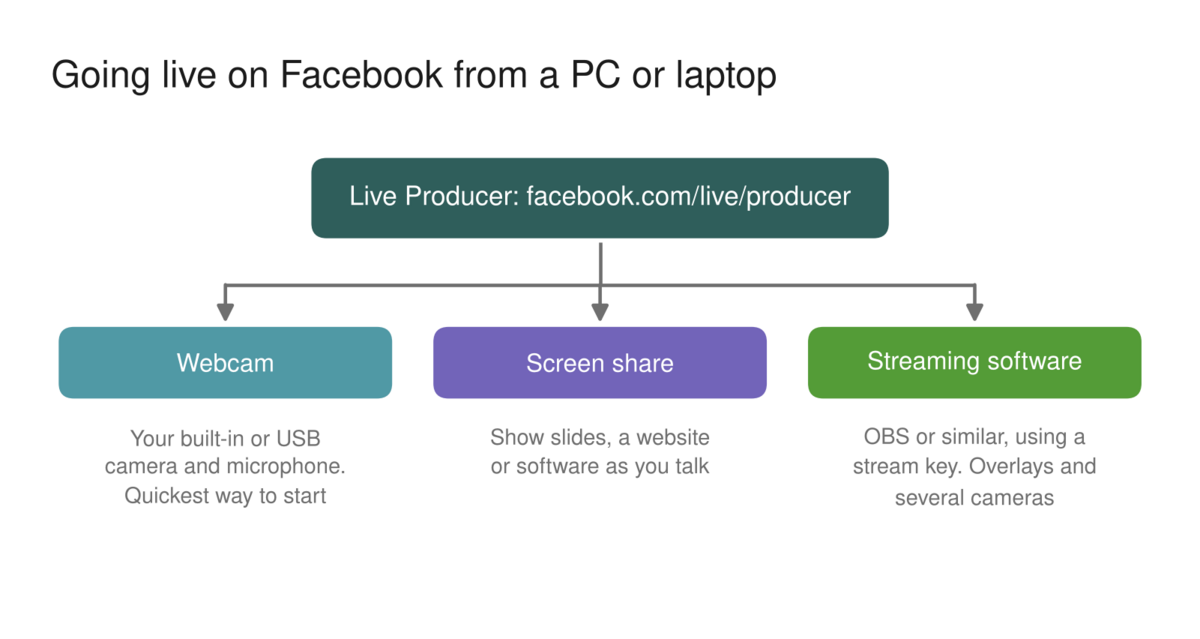
To go live on Facebook from a PC or laptop, open facebook.com/live/producer, or click Live video in the box where you create a post. Choose where to broadcast (your profile, a Page, a group or an event), select your webcam, screen share or streaming software, add a title and description, then click Go live. End the broadcast from the same screen when you have finished.
This guide walks through each step, explains the requirements and the three ways to broadcast from a computer, and covers what happens to your video afterwards, including the 30-day storage limit Facebook introduced in 2025. It finishes with practical advice on making a Facebook Live worth watching for a business audience, and on where live video fits in your social media strategy.
What do you need before you go live on Facebook?
Facebook has a few eligibility rules for live video. According to Lilach Bullock's November 2026 guide, which follows Facebook's own help centre, your account must be at least 60 days old, and a Page or a profile in professional mode needs at least 100 followers. To broadcast as a Page, you also need Facebook access or task access that lets you create content.
On the equipment side, you need:
- A computer with a webcam and microphone, built in or plugged in by USB.
- A stable internet connection. A wired connection is more reliable than wifi for anything important.
- An up-to-date browser. Facebook recommends Google Chrome for broadcasting from a computer, so switch to it if your camera will not load.
- Optional streaming software, such as OBS Studio, if you want overlays, several cameras or a more polished look.
Going live from a computer has real advantages over a phone. The camera is stable without a tripod, you can keep notes on screen, and it is far easier to share slides or software while you talk.
How to go live on Facebook from a PC or laptop, step by step
On a computer, Facebook's live tools sit in Live Producer, which works only on desktop. You reach it the same way whether you are broadcasting to a profile, a Page or a group:
- Go to facebook.com/live/producer, or click Live video in the create post box on your Feed, Page or group.
- Choose Go live now, or Create live video event if you want to schedule the broadcast for later.
- Choose where to post: your profile, a Page you manage, a group or an event.
- Select your video source: your webcam, a screen share, or streaming software.
- If you are using a webcam, allow your browser to use the camera and microphone, and check the preview.
- Add a clear title and a short description that tells viewers what they will get from watching.
- Set the audience. Choosing Only me for a first test broadcast is a good way to check sound and picture safely.
- Click Go live, and use the end button in Live Producer when you have finished.
Going live as a Page
If you manage a business Page, make sure you are switched into the Page, or select it as the destination in Live Producer, before you start. Otherwise you may broadcast from your personal profile by mistake. Followers of the Page can be notified when you go live, which is one reason scheduled Page broadcasts usually attract a bigger audience than spontaneous ones.
Three ways to broadcast from a computer
Live Producer gives you three choices of video source, and the right one depends on what you are showing and how polished it needs to look.
Webcam
The quickest option. Live Producer uses your computer's camera and microphone directly, with nothing else to install. It suits talks to camera, quick updates and Q&A sessions. Raise the laptop so the camera is at eye level, face a window or a soft light, and use a USB or headset microphone if you can, because built-in microphones pick up room echo.
Screen share
Screen sharing broadcasts what is on your screen, such as slides, a website or a piece of software, while you talk. It works well for tutorials and product demonstrations. Close notifications and private tabs first, and enlarge text, because many viewers will be watching on a phone.
Streaming software
Streaming software such as OBS Studio lets you combine cameras, screen shares, logos and lower-third captions into one broadcast. In Live Producer, choose streaming software as the source, copy the server URL and stream key that Facebook provides, and paste them into your software's stream settings. Treat the stream key like a password: anyone who has it can broadcast to your post. If a stream fails, generate a fresh key.
Copy and paste prompt: "I am running a [length]-minute Facebook Live for [audience] about [topic], broadcasting from my laptop. Write a run sheet with: a 30-second opening that hooks late joiners, three key points with one example each, two moments to invite comments, answers to the three questions viewers are most likely to ask, and a closing call to action to [action]."
If you want to build your social video skills, the Target Internet platform includes our Facebook marketing course and effective online video course, alongside skills benchmarking, accredited certification, over 400 episodes of the Digital Marketing Podcast, and monthly live masterclasses.
What happens to your Facebook Live video afterwards?
When the broadcast ends, Facebook saves it as a video post on your profile, Page or group so that people who missed it can watch the replay. That replay no longer lasts for ever.
From 19 February 2025, Meta changed its storage policy for live video. As Tech.co reported from Meta's announcement, new live broadcasts can be replayed, downloaded or shared from Facebook Pages or profiles for 30 days, after which they are automatically removed. Meta's explanation was that most live video views happen within the first few weeks. Hypebot's summary of the change adds that you can defer deletion for an additional six months.
For marketers, that changes the job after a broadcast. If a live session has lasting value, such as a webinar, a product launch or an expert interview, download it within 30 days and keep your own copy. You can then cut short clips into Reels, upload an edited version as a normal video, or publish it on YouTube or your website. Our guide to optimising your video content covers how to get more from each recording.
How to make a Facebook Live worth watching
The technical side takes minutes. The harder part is giving people a reason to stop scrolling and stay. The checklist below covers what to do before, during and after a broadcast.
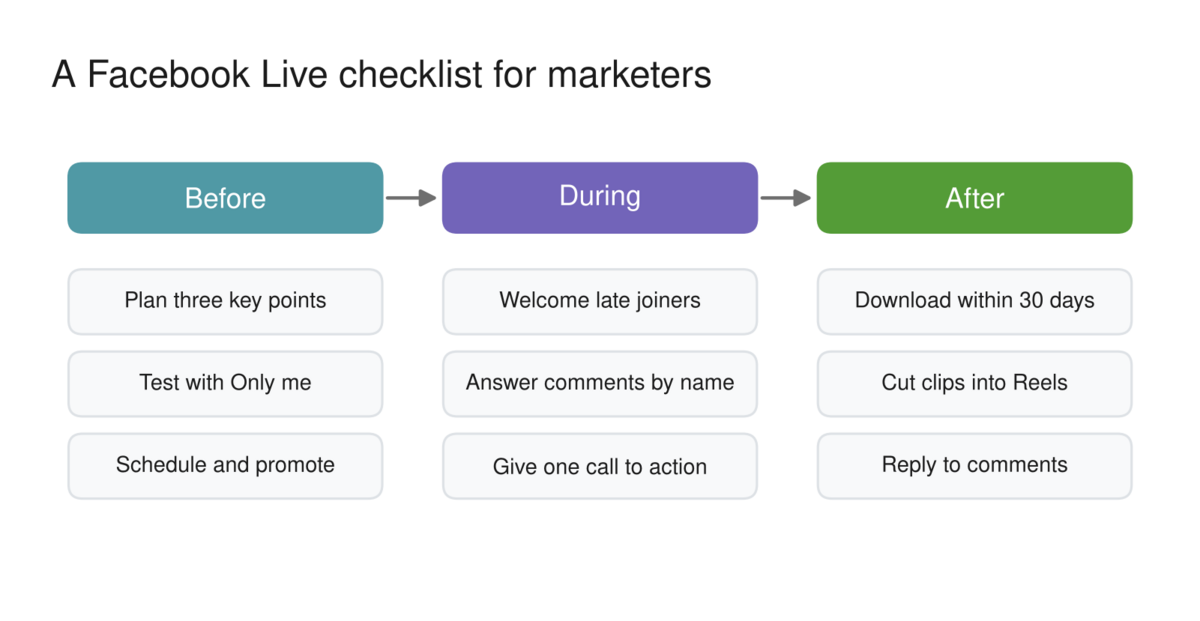
Before. Decide the single outcome you want: an answer to a common question, a product demonstration or a sign-up. Plan three key points rather than a script, test with the audience set to Only me, and schedule the broadcast a few days ahead so you can promote it.
During. Viewers arrive late, so briefly restate what the session is about every few minutes. Read out comments and answer people by name, because interaction is the main advantage live video has over a recording. Finish with one clear call to action rather than several.
After. Reply to comments left on the replay, download the video before the 30-day limit, and turn the best moments into short clips.
Formats that suit a business audience include Q&A sessions, behind-the-scenes tours, product demonstrations, expert interviews and live tutorials. Each one works better live than recorded because the audience can ask questions in the moment. Facebook Live can also play a role in a wider personal branding strategy, especially for founders and subject experts, where a regular show builds familiarity with your audience over time.
Facebook Live or another platform?
Facebook Live is strongest where your audience already spends time on Facebook: local businesses, community groups, consumer brands and many charities. For B2B audiences, LinkedIn's live video tends to reach decision makers more directly, while YouTube Live suits broadcasts you want people to find through search long after the event, without a 30-day limit on the replay.
You do not always have to choose. Multistreaming tools such as StreamYard and Restream can send one broadcast to several platforms at once, usually through the same stream key method described above. The trade-off is that comments arrive from several places at once, so it helps to have a colleague moderating while you present.
Whichever platform you choose, judge success on what happened after the broadcast, such as sign-ups, enquiries or replay views, rather than the live viewer count alone. Many people will only ever see the recording or a short clip.
If you are ready to take a structured approach to building your digital marketing skills, explore Target Internet membership options and discover how the platform's interactive courses, benchmarking tools, podcast, accredited certification and live masterclasses can accelerate where you are heading next.
Frequently asked questions
Can you go live on Facebook from a laptop?
Yes. On a laptop or desktop computer, Facebook uses Live Producer, which you can open at facebook.com/live/producer or by clicking Live video in the create post box. You can broadcast with your webcam, share your screen, or connect streaming software such as OBS, and you can go live now or schedule a broadcast.
Why am I unable to go live on Facebook?
The most common reasons are eligibility rules. Your account must be at least 60 days old, and a Page or professional-mode profile needs at least 100 followers. If you are going live as a Page, you need content access to it. If the camera will not load, allow camera and microphone access in your browser, or switch to Google Chrome.
How long do Facebook Live videos stay on Facebook?
Since 19 February 2025, new live broadcasts can be replayed, downloaded or shared for 30 days, after which Facebook removes them automatically. If you want to keep a broadcast, download it within that period, or use the option to defer deletion. You can then republish an edited version or cut clips into Reels.
Can I share my screen on Facebook Live from a computer?
Yes. In Live Producer, choose screen share as your video source and select the screen, window or browser tab you want to show. For a broadcast that combines your screen with your camera, logos or captions, use streaming software such as OBS and connect it to Facebook with a stream key.
How do I schedule a Facebook Live?
Open Live Producer on a computer and choose Create live video event instead of Go live now. Set the date and time, the destination and the details, and Facebook will create an event that people can follow. When the time comes, open the event in Live Producer, connect your video source and go live.
About the author
Daniel Rowles is lead trainer at Target Internet and the author of Digital Branding (Kogan Page). He co-hosts The Digital Marketing Podcast and delivers digital marketing and AI training for organisations around the world, including social media and video marketing. You can find out more on his Target Internet profile.
Bibliography
1. Bullock, L. (2026). How to go live on Facebook (phone, computer and Pages). https://www.lilachbullock.com/how-to-go-live-on-facebook/
2. Tech.co (2025). Your Facebook Live videos will soon disappear: here's how to save them. https://tech.co/news/facebook-stream-delete-how-save
3. Hypebot (2025). Facebook is deleting live video after 30 days. https://www.hypebot.com/facebook-is-deleting-live-video-after-30-days/
4. Social Media Examiner (2020). How to use Facebook Live Producer to go live from the desktop. https://www.socialmediaexaminer.com/how-to-use-facebook-live-producer-to-go-live-from-desktop/