Social selling on LinkedIn: a practical guide to turning connections into customers
Social selling is not about pestering strangers with cold pitches. It is about showing up consistently in the right places, contributing genuinely useful ideas to conversations your target audience is already having, and building the kind of familiarity and trust that makes people reach out to you when they are ready to buy. LinkedIn is the platform where this process works best for B2B sales professionals, and in 2026 the opportunity it presents has never been greater.
This guide draws on proven techniques used to generate over £1.2 million in revenue in a single twelve-month period - through LinkedIn activity combined with events - with a daily time investment of just 30 to 60 minutes for engagement and around three hours per week for content creation. These are not exceptional results for an exceptional operator. They are the result of applying a repeatable system consistently over time, and every element of that system is something any sales professional can adopt.
Why LinkedIn is the most powerful B2B channel right now
Before diving into tactics, it is worth understanding why LinkedIn deserves a prominent place in your sales activity. People are roughly 12 times more likely to engage with content from an individual than from a brand page. That single statistic reframes the entire platform. Your company's posts matter, but your personal posts - shared with added commentary and genuine perspective - will consistently outperform them. This is not a reason to ignore your company page. It is a reason to treat your own profile as your primary channel.
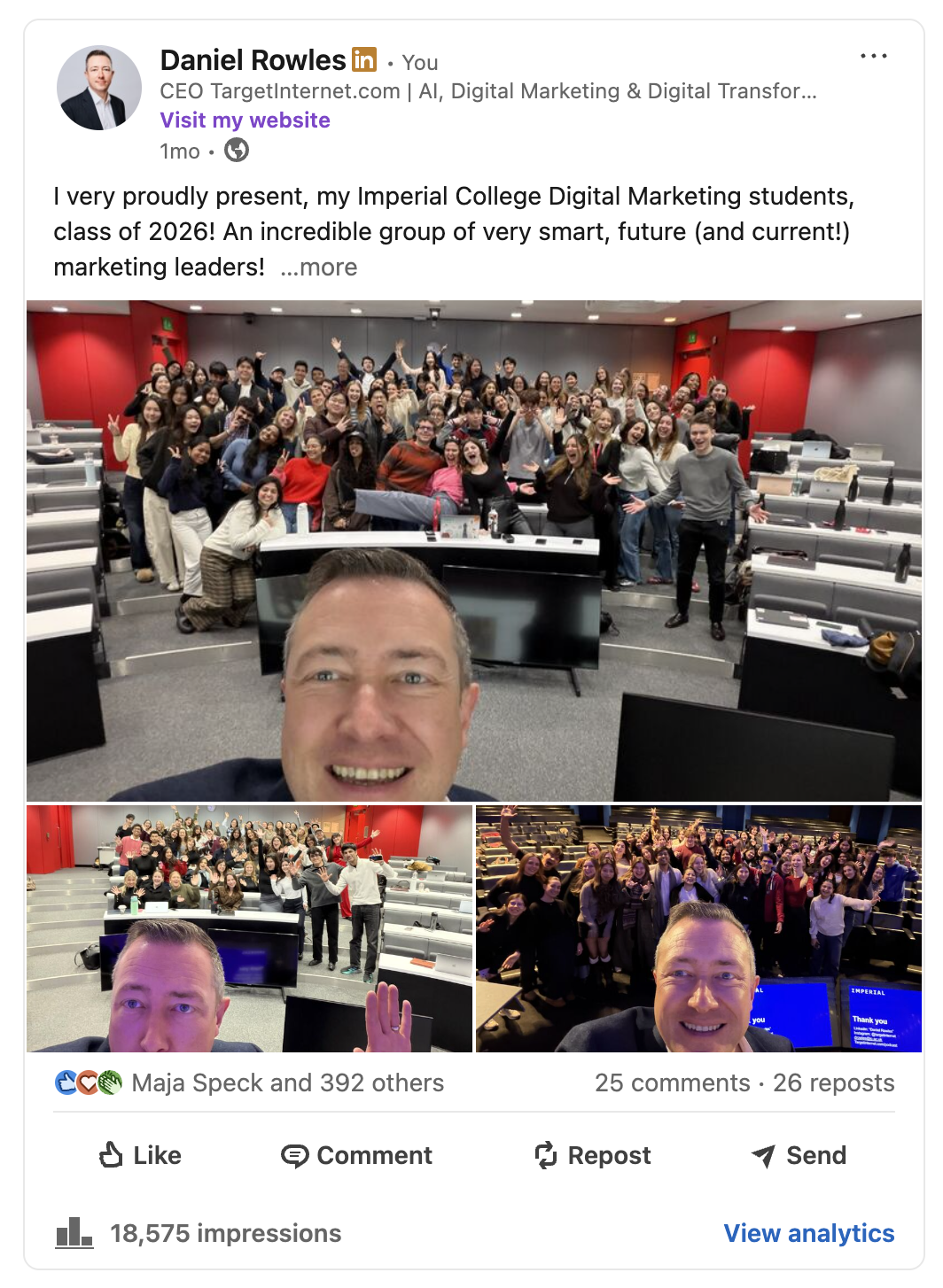
LinkedIn's engagement rates are also significantly stronger than many assume when compared to other platforms. Across metrics including comments, video views, and overall interactions, LinkedIn consistently outperforms channels that receive more attention from marketers such as TikTok and YouTube. The platform has also become a genuine search engine in its own right: LinkedIn processes approximately 3.2 billion searches per month, putting it close to YouTube's 3.3 billion. People are actively searching for thought leaders, services, and insights directly within LinkedIn every day.
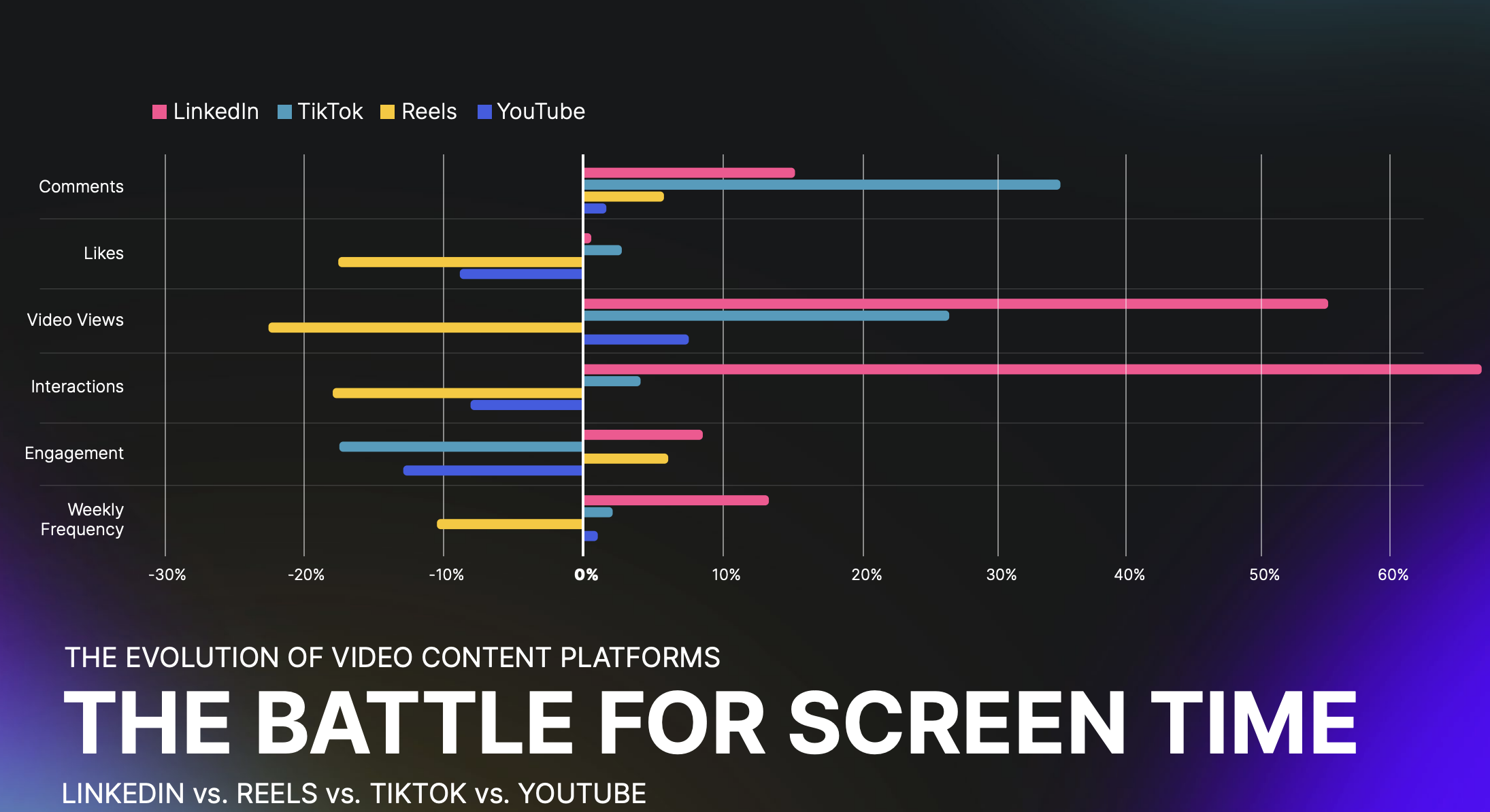
There is a further reason to invest in LinkedIn activity that has grown in importance over the past two years. Google's AI Overviews - the AI-generated summaries that now appear at the top of many search results pages - draw heavily on what individuals are saying and writing online. LinkedIn content feeds into these overviews. Consistently leading conversations and sharing expertise on LinkedIn therefore contributes to brand visibility beyond the platform itself, shaping how your expertise and your company appear in AI-generated search responses. This is a compounding benefit that rewards those who start early.
Building a profile that works as a sales asset
Your LinkedIn profile is not a CV. It is a landing page for anyone who has become curious about you - whether that is because they saw you comment on a post, found you in a search, or were referred by a mutual connection. The first question to answer when reviewing your profile is: what do I want to be found for? The words you place in your headline, your about section, and your experience entries directly influence whether you appear in LinkedIn search results for the terms your target audience actually uses.
A useful free tool for testing which phrases to include is Google Trends. By entering two competing phrases and comparing search volume over time, you can quickly determine which version of a term is currently dominant in your market. The phrase "internet marketing" was once the standard industry term. "Digital marketing" overtook it years ago and has continued to grow. Knowing this kind of trend means you can align your profile language to how your audience is actually searching, rather than the internal vocabulary your company uses.
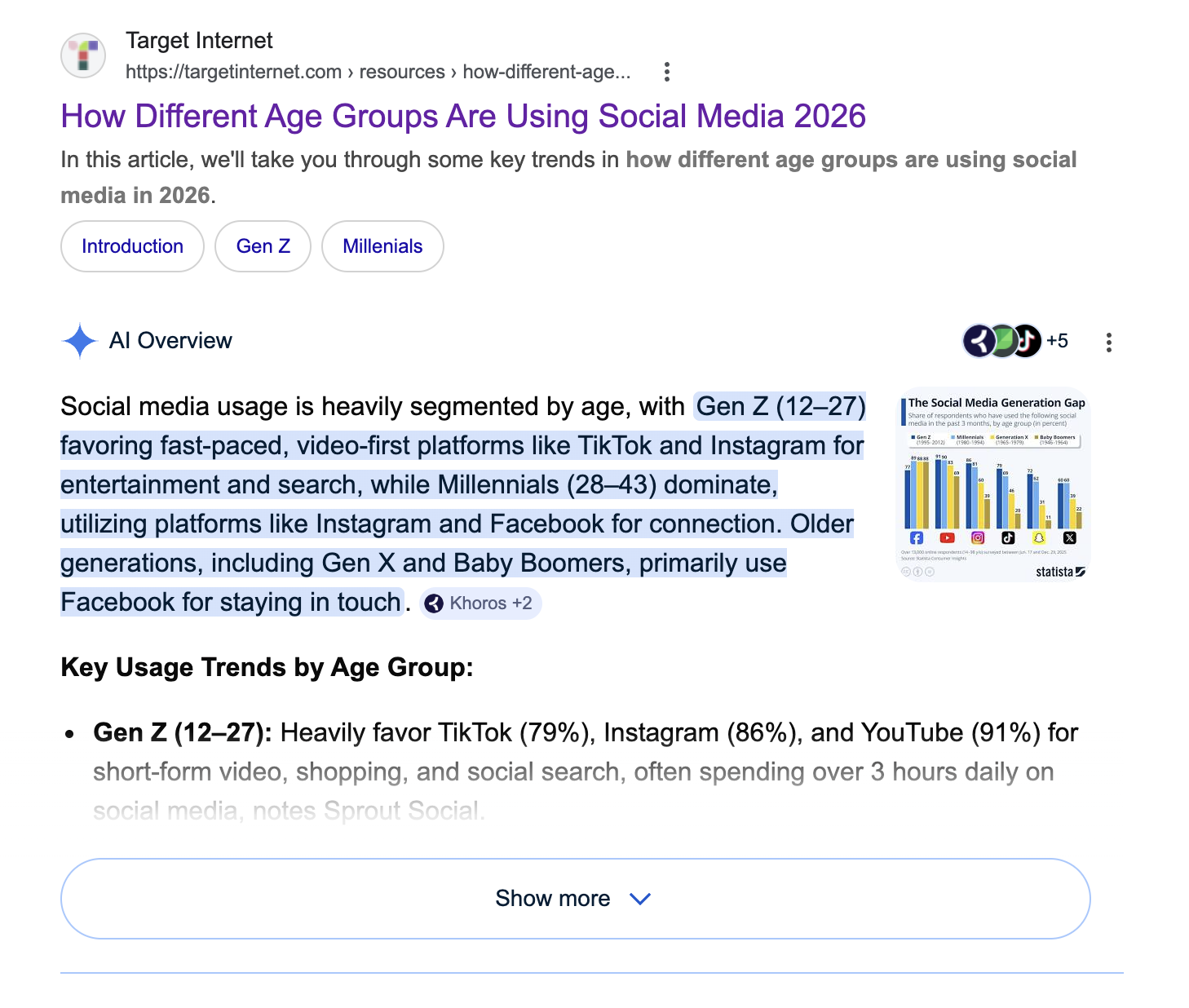
Within your About section you have 2,600 characters to describe what you do, what you offer, and why someone should care. Use them. This is not the place for modest understatement. Think from the perspective of your ideal client: what problem are they trying to solve, and how does your work address it? LinkedIn also allows you to add featured media - PDFs, images, links, and project examples - directly to your profile. Adding these increases dwell time on your page, and the longer someone spends reading your profile, the more likely they are to connect or reach out.
One often-overlooked feature is profile view tracking. LinkedIn shows you who has looked at your profile, and this list is a genuine source of warm leads. If someone from a target account visits your profile, they are doing so for a reason. A connection request accompanied by a short, relevant message - not a sales pitch - is entirely appropriate in this situation, and the conversion rate is meaningfully higher than cold outreach to someone who has shown no prior interest.
If you want an objective view of where your LinkedIn knowledge and activity stand today, the Target Internet platform includes skills benchmarking tools built for practising digital marketers, alongside interactive courses covering LinkedIn strategy and social selling in depth, accredited certification, over 400 podcast episodes, and monthly live masterclasses delivered by working practitioners.
Understanding your Social Selling Index
The Social Selling Index (SSI) is a free LinkedIn metric, accessible by searching for "SSI score" in Google and following the link to the LinkedIn SSI page. It gives you a score out of 100 based on four specific behaviours, and it matters because the higher your score, the greater the organic reach your content receives. LinkedIn's algorithm rewards accounts that are actively demonstrating the behaviours the platform values.
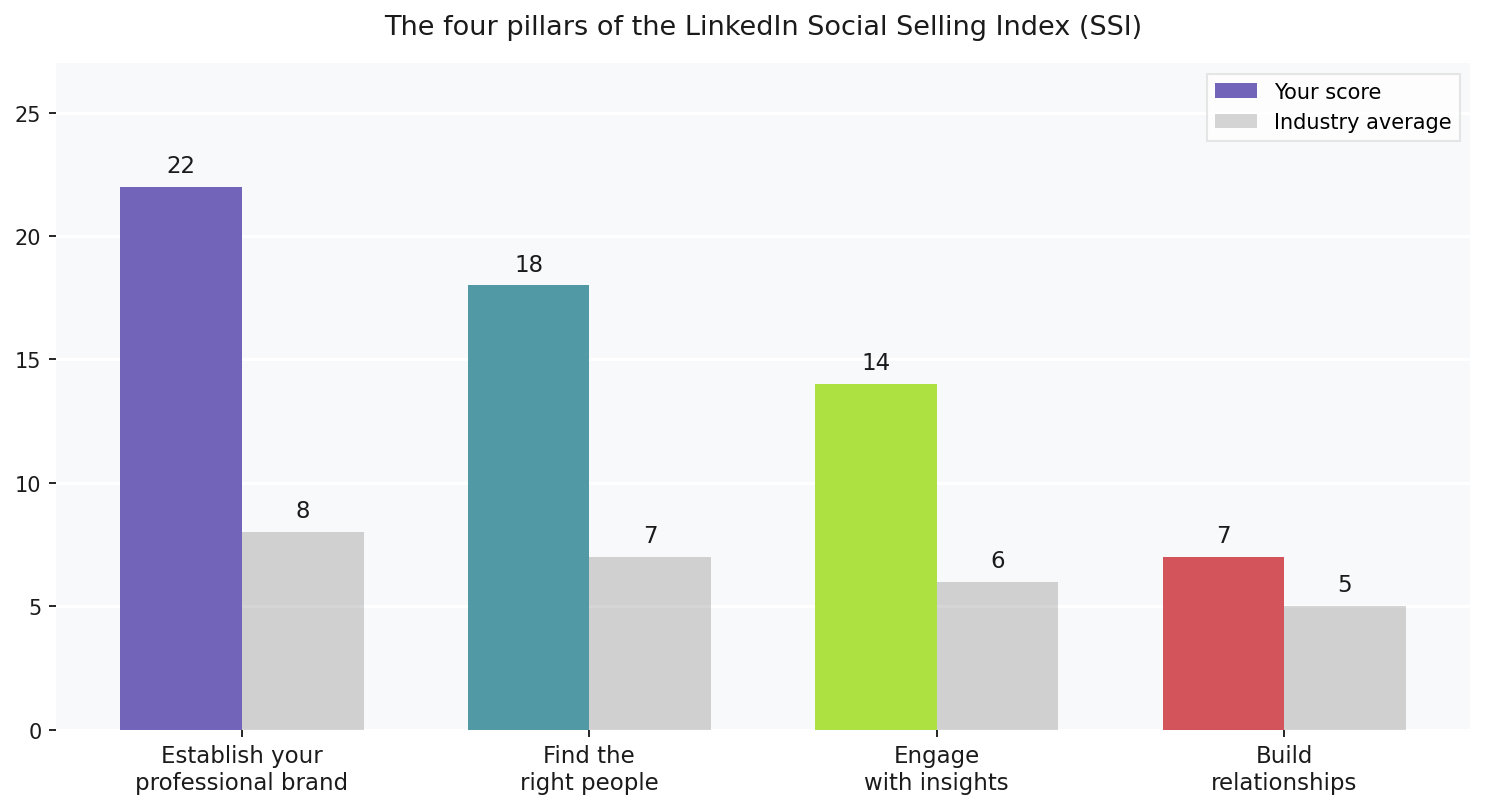
The four components are: establishing your professional brand by completing your profile and publishing meaningful content; finding the right people through effective search and research; engaging with insights by sharing and responding to relevant content; and building relationships by connecting with and earning the attention of decision-makers. In practice, the actions that improve all four components are straightforward: complete every section of your profile, post consistently, use LinkedIn's search tools to find relevant people, comment on their content, and respond to anyone who engages with yours.
The industry average SSI score sits around 26 out of 100. Reaching the high fifties or sixties puts you in the top tier for most industries. Getting beyond 70 is genuinely difficult because it requires sustained, consistent activity across all four pillars simultaneously. Do not be discouraged by a low starting score. Go into the platform, look at what is dragging your score down across those four categories, and address each one in turn. The score will follow your behaviour, usually within a week or two of sustained effort.
Finding the right people and building your target audience
Even LinkedIn's free search tools are powerful for account-based prospecting. Search for a target company, navigate to their people tab, and you can filter results by location, job title, skills, seniority level, and degree of connection. A second-degree connection means you and this person share a mutual contact - which means you can ask for a warm introduction before ever reaching out directly. That context transforms a cold approach into something far more likely to receive a positive response.
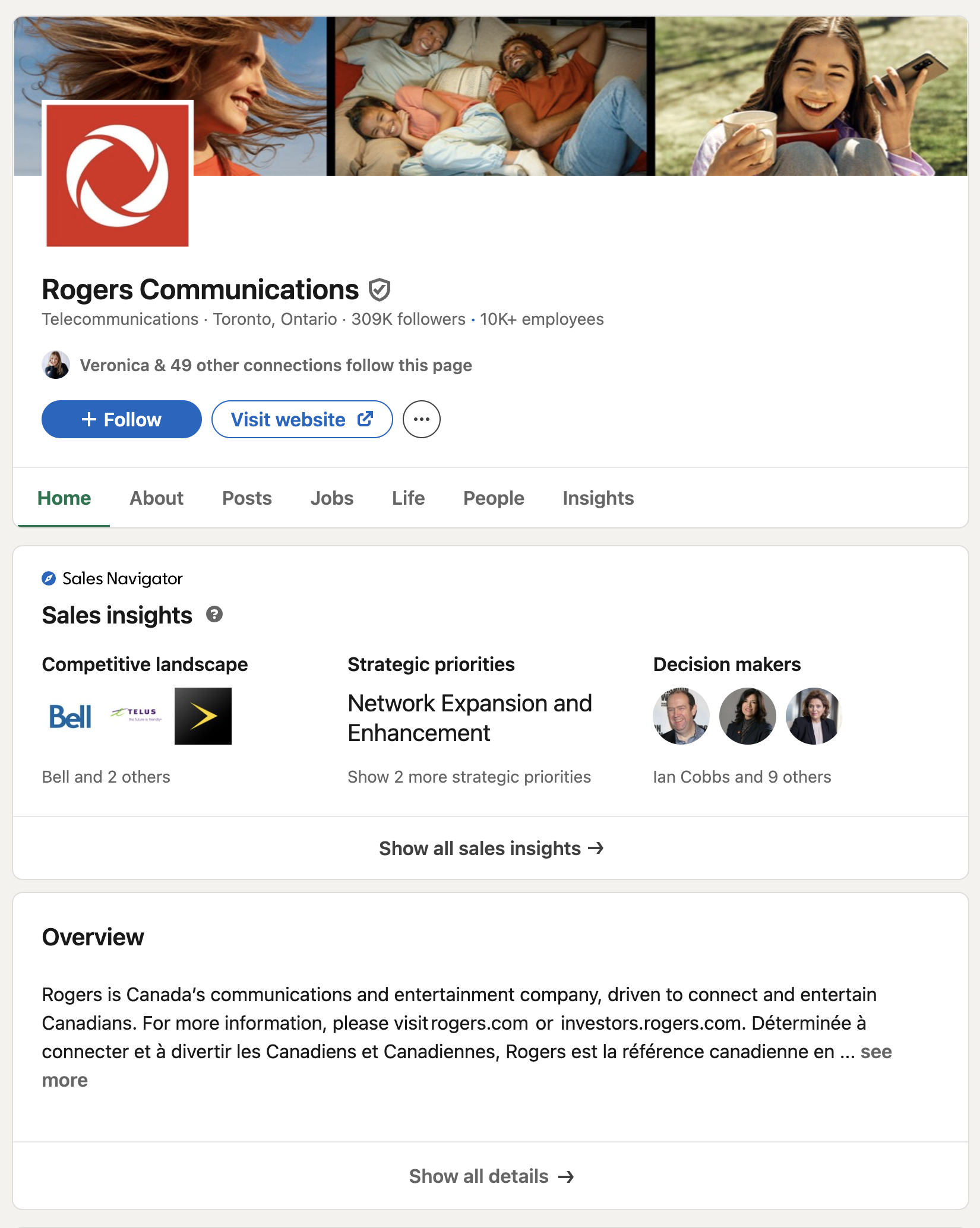
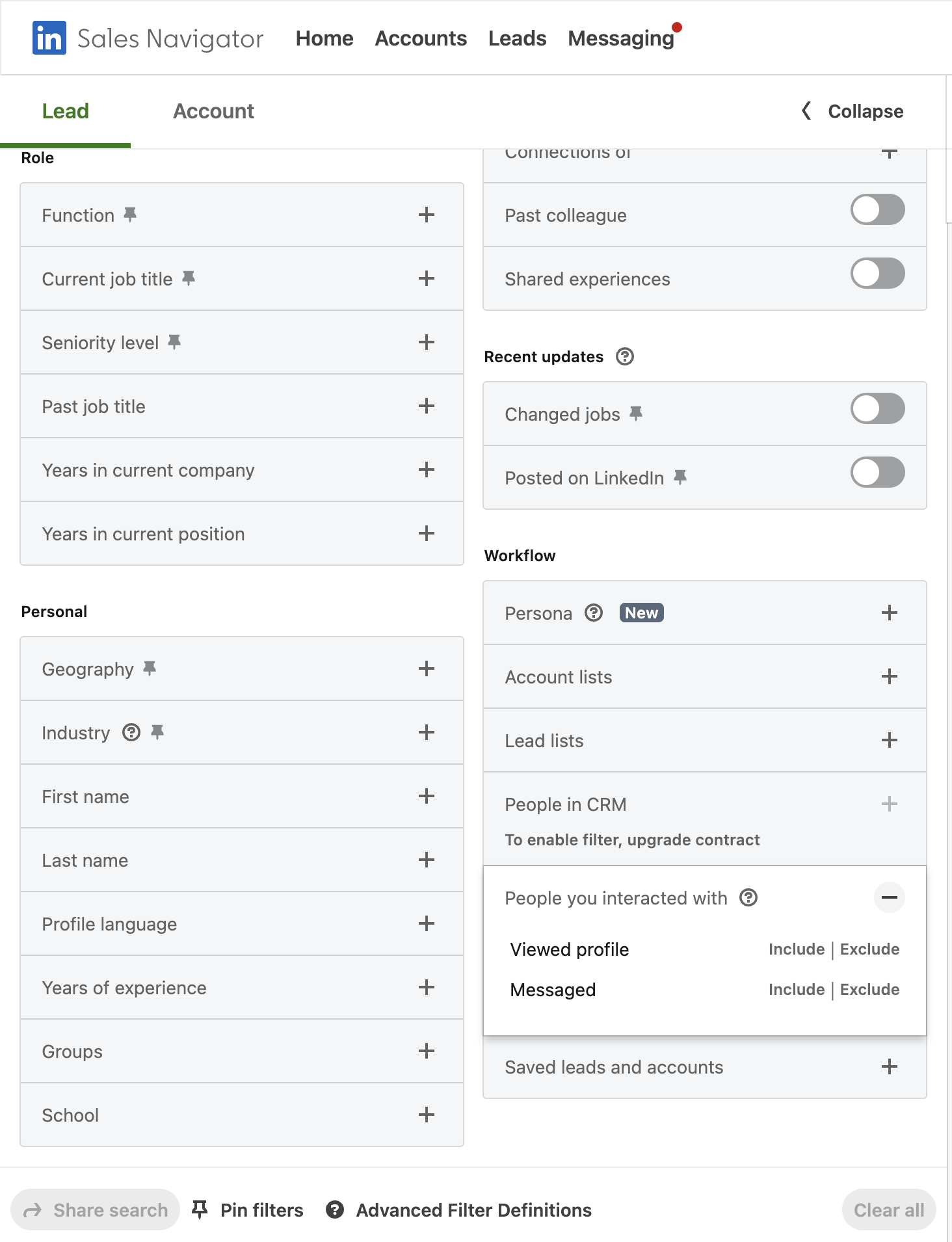
LinkedIn's Sales Navigator takes this considerably further. It generates an AI-powered Account IQ summary for each company, covering their strategic priorities, the challenges they face, and changes in headcount or leadership. You can define a persona that matches your ideal buyer, and Sales Navigator will surface individuals at target accounts who fit that profile. You can then track whether those people have posted recently, see which connections you share, and build organised lead lists that sit alongside your CRM workflow. It is a genuinely significant productivity multiplier for any sales professional who is serious about account-based selling.
Connection requests deserve careful thought. The common mistake is either sending a blank request with no message, or sending a message that is obviously selling something. Neither works well. The most effective connection requests reference something specific: a shared event, a piece of content they published, a mutual connection, or a topic you both care about. You are not asking for their time or their business. You are giving them a reason to let you into their network. Keep it brief, keep it genuine, and keep any mention of what you do to a minimum at this stage.
The role of content in social selling
Content on LinkedIn does not need to be complicated, expensively produced, or perfectly polished. In fact, authenticity frequently outperforms production value. The most important thing to understand about where LinkedIn content sits in the buying journey is that your audience is rarely in a purchasing mindset when they are scrolling through their feed. They are in what Google's See-Think-Do-Care framework would call the "think" stage: they are interested in the topic area, they are open to learning, but they are not yet at the point of evaluating solutions.
This means content that leads with an industry trend, a practical insight, or a perspective your audience finds genuinely useful will outperform content that leads with a product feature or a call to book a demo. The rule of thumb is simple: give context before you give a pitch. If your company has launched an AI-powered feature in its platform, a post that opens with a relevant industry statistic about interactive learning and then shows the feature in action will consistently outperform a post that simply announces the feature.
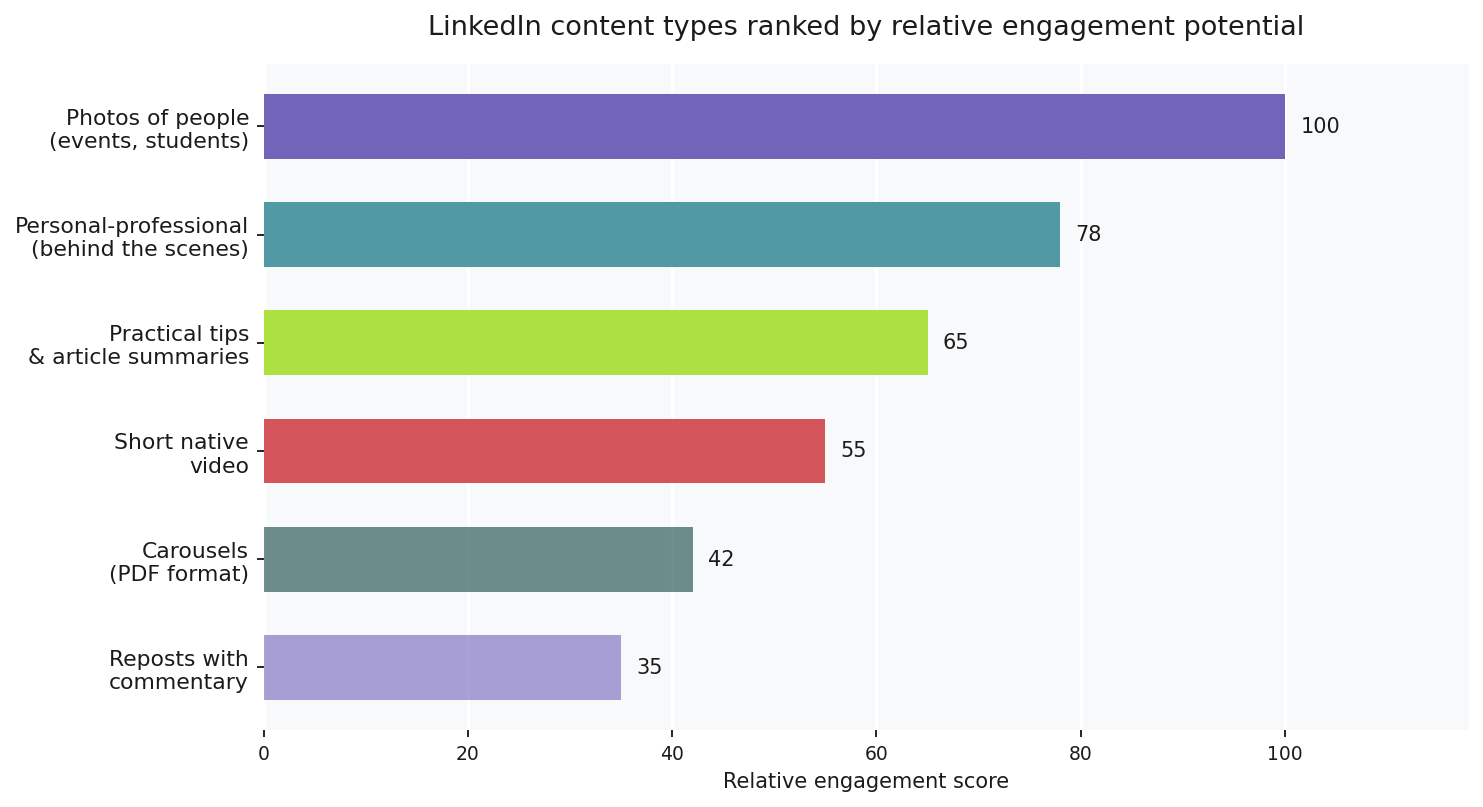
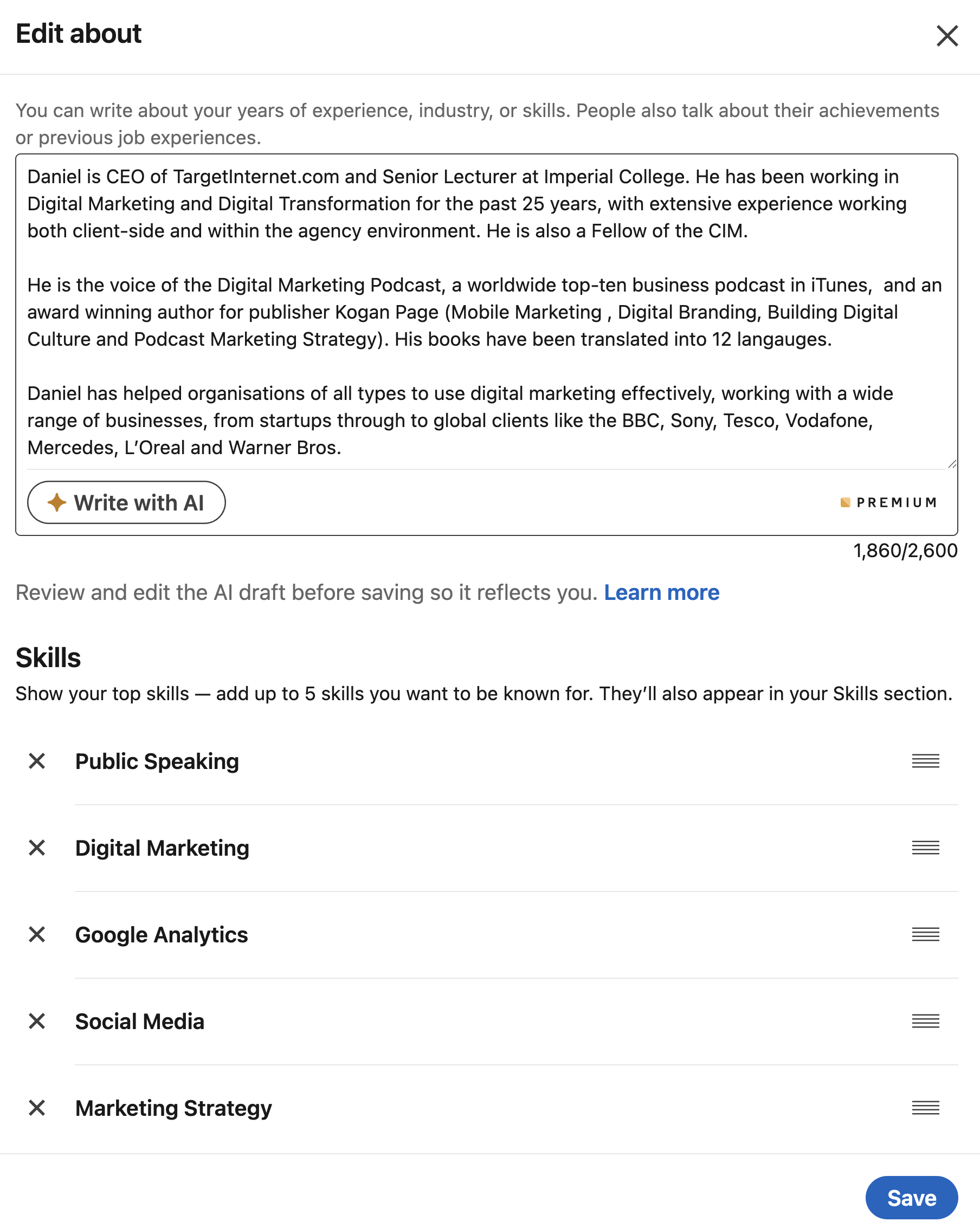
Photos of people - at events, in meetings, in teaching environments - are the single highest-performing content type on LinkedIn. They attract reactions because people respond to other people, and they often trigger private messages from contacts who say they have been meaning to get in touch. Behind-the-scenes content, personal reflections on professional milestones, and posts that ask a genuine question of your audience also perform strongly. You do not need to produce a high-quality video to get reach. A short, direct, phone-filmed clip answering a question your audience cares about will frequently outperform a professionally edited piece.
Carousels - created by uploading a PDF to LinkedIn, which the platform automatically converts into a swipeable format - work well for structured educational content, but carry an important caveat. Most LinkedIn users consume content on mobile. A carousel built from a dense A4 document will be illegible at phone scale. If you are creating carousels deliberately, design them for mobile from the outset: large type, minimal text per slide, one idea per page.
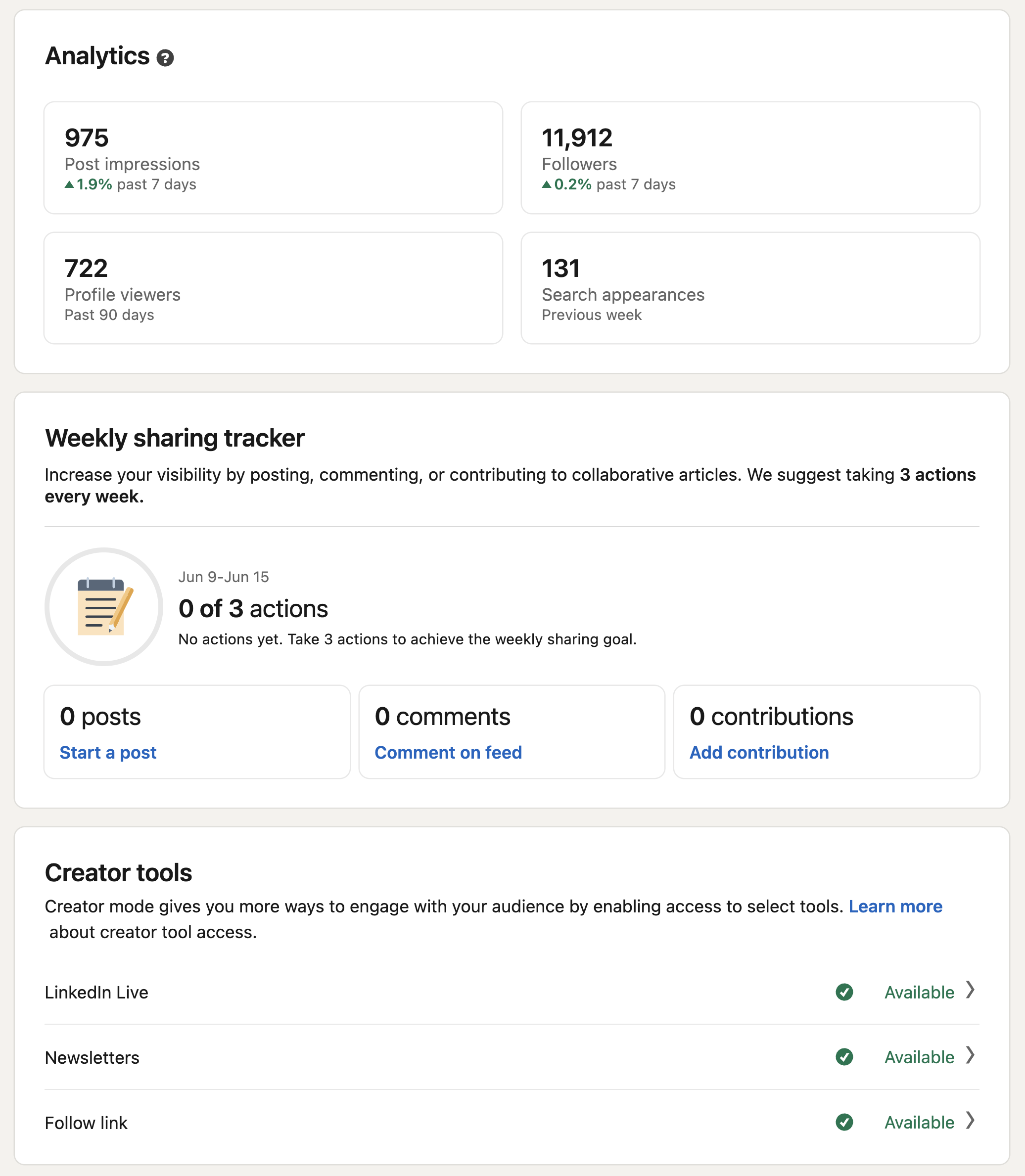
On the question of posting frequency, LinkedIn's own data shows that members who post once a week receive up to four times more profile views than those who post less often. Going in every day is beneficial if you have the time and content to sustain it, but once a week as a consistent minimum is where the algorithm begins to reward you. What matters far more than high frequency is consistent frequency. Posting five times in one week and then disappearing for three weeks is considerably less effective than posting once a week without fail.
Links, reposts, and the algorithm
One of the most counterintuitive aspects of LinkedIn's algorithm is its treatment of external links. LinkedIn's preference is for content that keeps users on the platform. A post containing a link to an external website - even a highly relevant one - will sometimes receive lower organic distribution than the same post without the link. The workaround that many experienced users now apply is to write the post without the link in the body, then add the link as the first comment. You can signpost this in the post itself with a simple "link in comments" note. This approach is not universal in its effectiveness - audiences and content types vary - but testing it against direct links in the post body is worth doing.
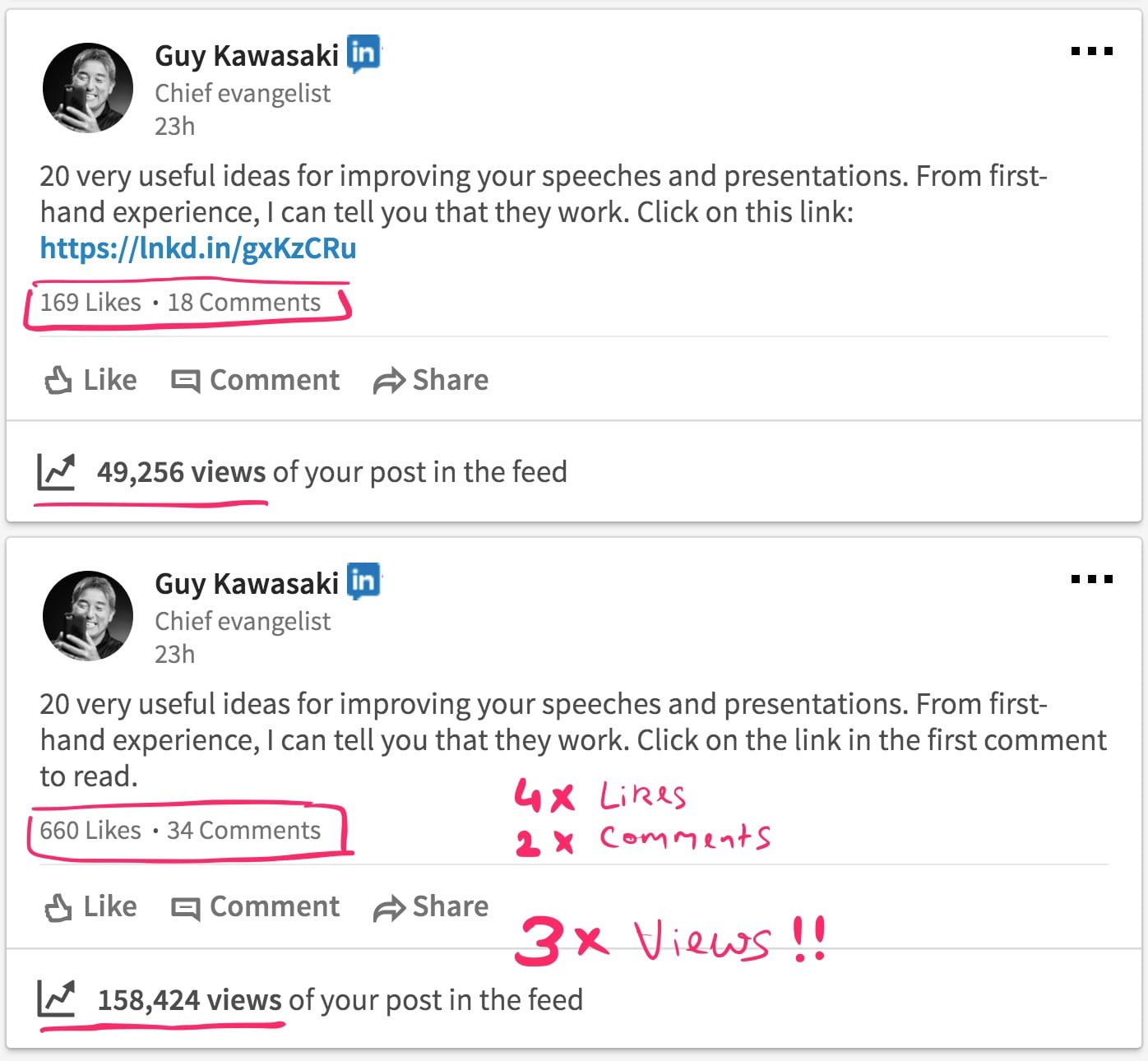
When resharing other people's content, always add your own commentary. LinkedIn's algorithm gives significantly more distribution to reposts with added text than to bare reposts, and more importantly, your audience is following you for your perspective, not simply to be pointed towards things other people have said. A brief sentence explaining why you think a piece of content matters - or asking your audience a question about it - transforms a passive repost into an active piece of content creation. Ending posts with a question is one of the most reliable ways to drive comments, and comments are among the most powerful signals the LinkedIn algorithm uses to extend reach.
Using AI to accelerate your LinkedIn activity
AI tools such as Microsoft Copilot, ChatGPT, and similar assistants can meaningfully reduce the time it takes to research prospects, draft content, and analyse what is working. Understanding the difference between a model-based response and a web-lookup response is the first practical thing to know. Ask an AI tool "what are the latest trends in B2B marketing?" and it will answer from its training data, which may be months or years out of date. Ask it to "look up the latest trends in B2B marketing" and it will perform a live web search, returning current information. This distinction matters every time you are asking about something time-sensitive.
For content drafting, the most powerful technique for getting AI to write in your voice is to build a tone-of-voice prompt from your own previous writing. Gather a representative selection of your posts, emails, and articles into a single document, then ask the AI to analyse the writing style and produce a detailed description you can paste into future prompts. The output will describe the patterns in your writing - sentence length, vocabulary, level of formality, structural tendencies - and when you use that description as a prefix to any content request, the AI will write in a style that closely matches your own. A useful test: write a version yourself, then generate an AI version using your tone description, and ask a colleague who knows your writing well to identify which is which. The results are often indistinguishable.
The comparison technique is particularly useful for headlines and post titles. Ask an AI tool to generate five different versions of a title for a post you are planning, then ask it to compare and contrast them on criteria such as clarity, intrigue, and relevance to your audience, and to recommend the strongest option with reasoning. This takes under two minutes and consistently produces a better opening line than most people would arrive at by thinking alone. Strong titles matter disproportionately on LinkedIn because they determine whether someone stops scrolling in the first place.
AI can also be used to summarise content from target accounts. If a prospect company has published a detailed article or report, you can paste it into an AI tool and ask it to generate a LinkedIn post summarising the key points - tagging the company in the post so they are notified. This serves two purposes simultaneously: it provides useful content to your own audience, and it flags to the target account that you are paying attention to their thinking. Done regularly, it is one of the most natural and non-salesy ways to build a relationship with someone you have not yet met.
If you want structured guidance on using AI effectively within your marketing and sales workflows, the Target Internet platform offers interactive courses covering AI prompt engineering, content strategy, and digital marketing skills benchmarking - alongside over 400 podcast episodes, accredited certification, and monthly live masterclasses where you can ask questions of practitioners working at the sharp end of these challenges.
Turning engagement into leads: the cadence that works
The most common mistake people make with social selling is treating it as a broadcast channel: post content, wait for the phone to ring. Content creates visibility and credibility, but it is the engagement layer that turns that visibility into actual conversations. The cadence that works consistently follows a specific sequence.
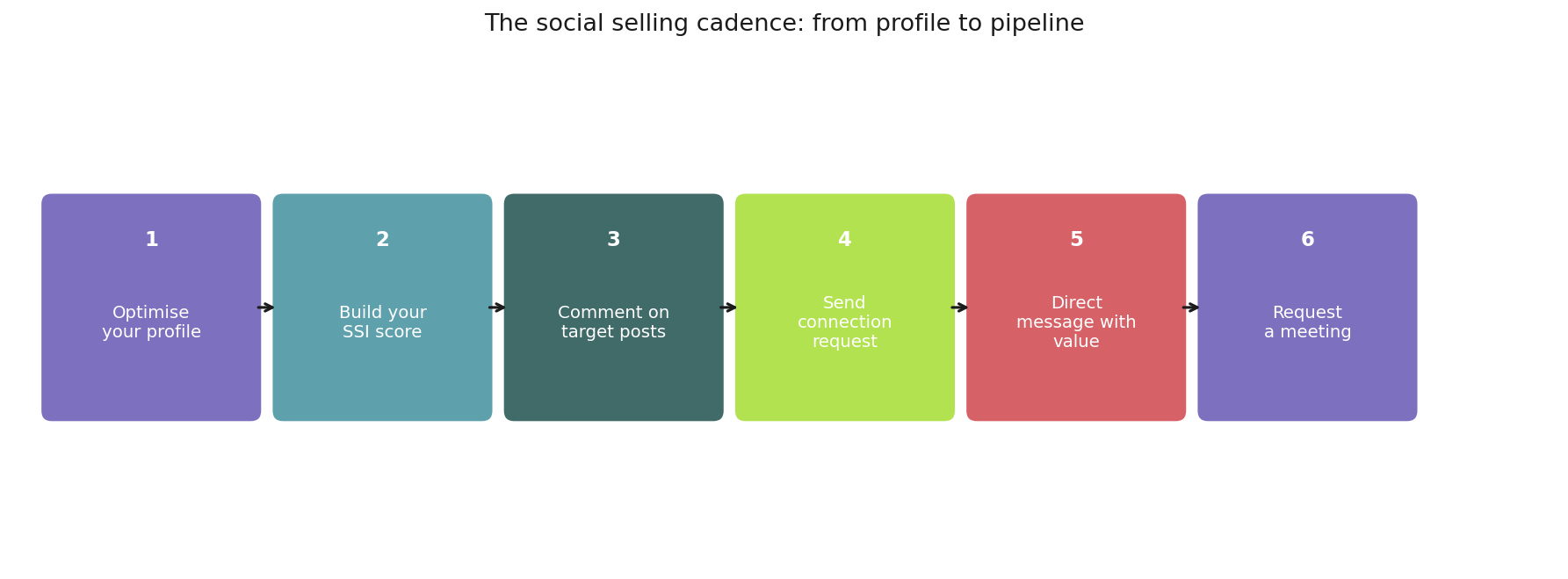
Start by commenting on content posted by people at target accounts. Not a generic "great post" comment, but a substantive response that adds something: a related observation, a question, a data point that extends the conversation. This puts your name and face in front of the right people in a context that signals expertise rather than commercial intent. Once you have commented a few times and your name is familiar, a connection request with a brief, specific message becomes a warm approach rather than a cold one.
After connecting, a direct message that references a shared interest, points to a piece of content you thought they would find useful, or extends a conversation you had in the comments is far more likely to receive a response than anything that opens with a product pitch. This is the moment where you are building a relationship, not closing a deal. The meeting request - or the discovery call - comes later, once you have established that you are a credible, relevant person who understands their world.
Comments on your own posts are also a significant opportunity. When someone takes the time to comment, they are signalling active interest in the topic. Replying to every comment - genuinely, with something more than a thank-you - keeps the conversation alive, increases the post's algorithmic reach, and sometimes opens a one-to-one exchange. Commenting on other people's comments within your posts extends this further. If someone leaves a thoughtful comment and you respond to it, they are very likely to reply again - and that back-and-forth is one of the highest-quality engagement signals the LinkedIn algorithm recognises.
Sales Navigator's workflow tools allow you to automate some of the monitoring involved in this cadence. You can set up triggers that alert you when someone in a lead list posts new content, views your profile, or changes role - giving you a natural, timely reason to reach out. Building this kind of systematic awareness across a buying group, rather than focusing all attention on a single contact, significantly increases the probability of a conversation converting. Purchasing decisions in B2B organisations are rarely made by one person. The more broadly familiar your name and thinking are within a target account, the easier every conversation becomes.
Bringing it all together: a practical weekly routine
The full approach described in this guide does not require unlimited time. What it requires is consistent time, applied to the right activities. A realistic and effective weekly routine looks something like this. Every working morning, spend 30 to 60 minutes on engagement activity: comment on five to ten posts from target accounts and thought leaders in your space, respond to any comments on your own recent posts, check your profile views for anyone worth connecting to, and send one to three targeted connection requests. This engagement activity is what builds your SSI score and keeps your name visible in the right circles.
Once or twice a week, post original content. This does not need to be long-form. A photo from an event with three or four sentences on what you learnt. A practical tip your audience would find genuinely useful. A question that invites your network to share their experience. Use AI to help you draft and refine the headline and body, but apply your tone-of-voice prompt so the result sounds like you rather than a generic content generator.
Once a week, review your post analytics. LinkedIn shows you impressions, reactions, comments, and reposts for each piece of content. Look for the patterns: which topics generated the most comments, which formats drove the most profile views, which posts led to connection requests or direct messages. Double down on what is working. Adjust what is not. The algorithm changes over time, and your audience's response to different content types will shift as your following grows. Treat your LinkedIn presence as a channel that rewards ongoing attention and refinement, not a one-time setup task.
If you are ready to take a structured approach to your LinkedIn and social selling skills, explore Target Internet membership options and discover how the platform's interactive courses, skills benchmarking tools, accredited certification, Digital Marketing Podcast archive, and monthly live masterclasses can help you build the knowledge and habits to make LinkedIn a consistent source of leads and relationships.
Bibliography
1. LinkedIn. LinkedIn Social Selling Index. https://www.linkedin.com/sales/ssi
2. LinkedIn Economic Graph. The State of Sales 2023. https://economicgraph.linkedin.com/research
3. Google. Google Trends. https://trends.google.com/trends/
4. Think with Google. The See-Think-Do-Care framework. https://www.thinkwithgoogle.com
5. Smart Insights. LinkedIn marketing statistics 2024. https://www.smartinsights.com/social-media-marketing/linkedin-marketing/linkedin-statistics/
6. Econsultancy. B2B social selling: how to use LinkedIn for lead generation. https://econsultancy.com
7. Digital Marketing Institute. The complete guide to social selling on LinkedIn. https://digitalmarketinginstitute.com/blog/the-ultimate-guide-to-social-selling
8. Target Internet. Digital Marketing Podcast. https://targetinternet.com/resources/podcast/