By Daniel Rowles, lead trainer at Target Internet and author of Digital Branding (Kogan Page). Last updated: November 2026.
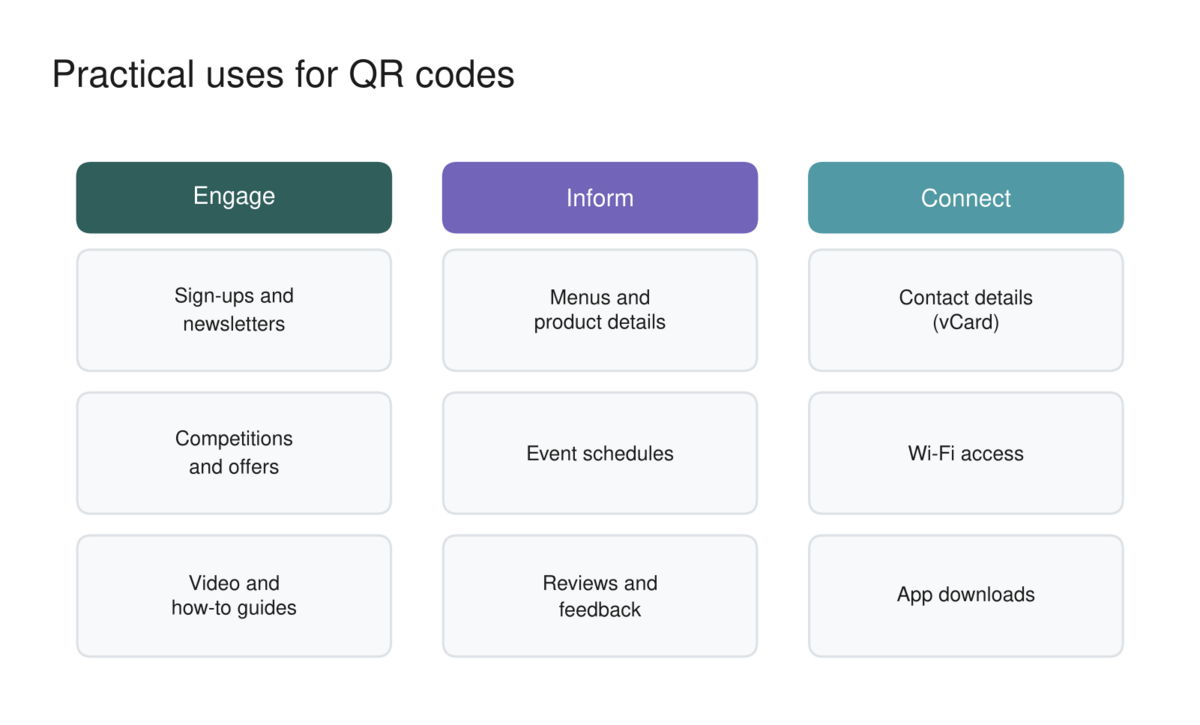
QR codes in marketing connect printed and physical media to digital content: a customer points their phone camera at the code and goes straight to a web page, offer, video, sign-up form or contact card. They work best when the reason to scan is obvious, the destination is designed for mobile, and every code is tracked. Once written off as a gimmick, QR codes became everyday tools after phone cameras started scanning them without a separate app.
This ultimate guide brings together our earlier QR code articles, including our original QR code guide, our guide to putting contact details into a QR code and a case study from one of our podcast listeners.
What is a QR code?
A QR (quick response) code is a square, two-dimensional barcode that stores information such as a web address, text, contact details or Wi-Fi settings. It can hold far more data than a traditional barcode and can still be read if part of it is damaged or covered, which is why codes often have a logo in the middle.
There are two main types. Static codes store the destination directly and cannot be changed after printing. Dynamic codes point to a short redirect link that you can update later and usually include scan tracking, which makes them a better choice for most marketing.
Why use QR codes in marketing?
- They bridge offline and online. Print, packaging, posters and events can lead directly to digital content and measurable actions.
- They remove friction. Scanning is quicker than typing a web address, especially a long one.
- They are measurable. With dynamic codes and UTM tracking, you can see which placement drove which results.
- They are cheap and flexible. A code costs little to create and, if dynamic, its destination can change without reprinting.
What does a QR code campaign look like in practice?
One of our podcast listeners, Tim Mayer, Sales and Marketing Director at MDL Marinas, shared how the company used QR codes after hearing about them on The Digital Marketing Podcast. MDL Marinas runs marinas across the UK and has customers who traditionally preferred printed media. As Tim put it, "QR codes bridged the gap between traditional media and new ways of delivering information."
The team added QR codes to printed notices about an award scheme, posters around its marinas linking to Tripadvisor, and a benefits card for berth-holders. A code in each new season's welcome pack gave members access to an online benefits area. Even though the new season began in the middle of the 2020 lockdown, the company gained 900 registrations to the new system through the codes in its welcome packs.
The lesson is that QR codes work best when they connect a physical touchpoint people already value to something genuinely useful online.
How do you create a QR code?
Many free and paid generators create codes in seconds. Choose a dynamic code generator if you want tracking or may need to change the destination. Then follow these steps:
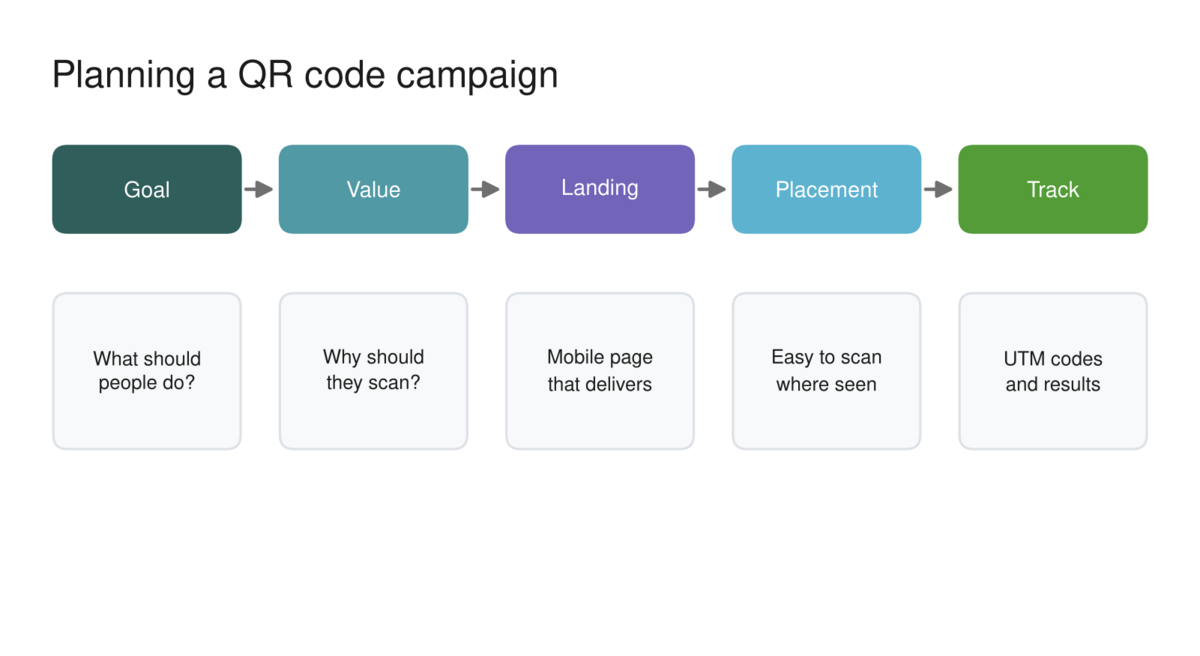
- Set a goal. Decide exactly what you want people to do after scanning.
- Give a reason to scan. Tell people what they will get, for example "Scan for 10% off" or "Scan to watch the demo".
- Build a mobile landing page that loads quickly and delivers what you promised. Our guide on how to test if your website is mobile-friendly will help.
- Place it where people can scan it. Make it large enough, with good contrast and a quiet margin around it, and avoid places with no signal or where people are moving fast.
- Track it. Add UTM parameters to the destination URL so scans show up properly in your analytics.
Copy and paste prompt: "Act as a marketing campaign planner. We want to use QR codes on [printed item or location] for [brand] to encourage [audience] to [desired action]. Suggest five ideas for what the code could link to, the short call to action to print beside each code, what the mobile landing page should include, and the UTM parameters and success measures we should use."
How do you put contact details into a QR code?
QR codes can store contact details in the vCard format, so scanning a code on a business card, stand or email signature lets someone save your name, phone number, email and website straight to their phone. Most QR generators offer a vCard option. Keep the details short, because more data makes the code denser and harder to scan, or use a dynamic code that links to an online contact card you can update.
What are the risks of QR codes?
Because people cannot see where a code leads before scanning, criminals sometimes stick fake codes over real ones to send people to fraudulent sites. Protect your customers by using your own domain in the destination URL, checking printed and physical placements regularly, and never asking for payment details immediately after a scan without clear branding. Test every code on several phones before printing.
The Target Internet platform can help you build these skills, with interactive courses across digital marketing and AI, skills benchmarking to show where your gaps are, accredited certification, over 400 episodes of the Digital Marketing Podcast, and monthly live masterclasses.
Frequently asked questions
Are QR codes still used in marketing?
Yes. Since phone cameras began reading them without an app, QR codes have become common on packaging, menus, posters, events and print advertising.
What is the difference between static and dynamic QR codes?
A static code stores the destination directly and cannot be changed. A dynamic code points to a redirect link that can be updated and usually includes scan tracking.
How do I track QR code scans?
Use a dynamic QR code with built-in scan reporting, and add UTM parameters to the destination URL so visits and conversions appear in your analytics.
Can a QR code store contact details?
Yes. QR codes can store a vCard, which lets people save your contact details to their phone with one scan.
How big should a QR code be?
It depends on scanning distance. Codes on printed materials read up close can be small, but codes on posters or signs need to be much larger. Always test at the real distance.
If you are ready to take a structured approach to building your digital marketing skills, explore Target Internet membership options and discover how interactive courses, benchmarking tools, the podcast, accredited certification and live masterclasses can support you and your team.
About the author
Daniel Rowles is lead trainer at Target Internet, a Senior Lecturer at Imperial College and the author of several books on digital marketing published by Kogan Page, including Digital Branding. He co-hosts The Digital Marketing Podcast and delivers digital marketing and AI training for organisations around the world. You can find out more on his Target Internet profile.
Bibliography
1. Target Internet (2021). QR code marketing case study: how QR codes helped MDL Marinas capture 900 sign-ups. Interview with Tim Mayer, MDL Marinas.
2. DENSO WAVE. QR Code.com: history and features of QR codes. https://www.qrcode.com/en/